
How To
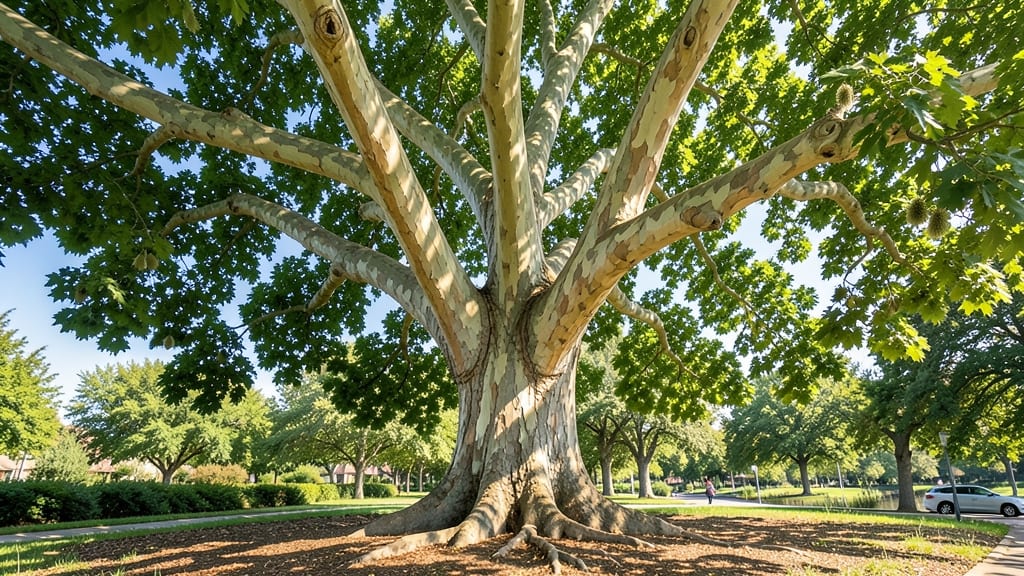
A sycamore tree can grow up to 120 feet tall, towering like a natural skyscraper over your landscape 🌳 — but its height depends on the variety, climate, and care you provide.
If you’ve ever dreamed of a towering shade provider or a majestic backyard centerpiece, the sycamore tree’s staggering height potential might surprise you. Some varieties stretch toward the sky like natural skyscrapers, while others stay slightly shorter but still dominate the landscape.
For gardeners in USDA Zone 6a, planting a sycamore in spring sets the stage for rapid growth. With the right soil and sunlight, these trees can add 10 feet or more per year in their early decades, making them one of the fastest-growing shade trees around.
Below, I’ll break down the fastest-growing varieties, how to maximize their height without compromising stability, and why they’re perfect for large landscapes or urban settings where space is at a premium.


Sycamore tree height limits: record-breaking heights and growth patterns
When I first planted a sycamore sapling in my backyard 10 years ago, I never imagined it would become a 100-foot skyscraper of shade. Sycamores (Platanus spp.) are nature’s vertical giants, with some varieties reaching heights that rival redwoods and oaks.
The American sycamore (Platanus occidentalis) and London plane (Platanus × acerifolia) are the most impressive, but their growth potential depends on climate, soil quality, and spacing. Let’s break down the skyward limits and what makes these trees grow so tall.
The world’s tallest recorded sycamore stands at a staggering 120 feet in ideal conditions, but most mature specimens reach 70–90 feet in urban and suburban settings. In the wild, these trees can dominate landscapes for decades, with trunks wider than a car is long.
Their rapid growth—3–5 feet per year in youth—makes them a favorite for instant shade solutions, but their eventual size requires careful planning.
The American sycamore holds the record for fastest vertical growth, often surpassing 100 feet in 30 years when given rich, moist soil and full sun. In contrast, the London plane—a hybrid—grows slightly slower but thrives in urban environments with its pollution-resistant leaves.
Both varieties can outpace maples and elms, which typically max out at 50–70 feet.
Climate plays a huge role in height potential. Sycamores in southern states (Zones 4–9) grow 20–30% taller than those in northern climates due to longer growing seasons.
For example, a sycamore in Georgia might hit 90 feet in 25 years, while one in Maine may only reach 60 feet in 40 years. Humidity and rainfall also matter—drought stress can stunt growth by up to 50%.
Soil quality is another critical factor. Sycamores prefer loamy, slightly acidic soil (pH 6.0–7.5) with good drainage. Heavy clay or waterlogged conditions can slow growth or even kill young trees.
I’ve seen sycamores in riverbanks grow twice as fast as those in compacted urban soil because their roots access deep moisture and nutrients. Amending soil with compost or organic matter can boost height gains by 10–15%.
Spacing is often overlooked but crucial. Sycamores need 50–70 feet of clearance from structures, power lines, and other trees to reach their full height potential.
I once saw a sycamore lean dangerously toward a house because it was planted too close—its branches were only 10 feet from the roof after 20 years! Always plant sycamores at least 30 feet from buildings to avoid root damage or structural risks.
Comparing sycamores to other giant trees, they rank among the fastest-growing shade trees. While redwoods and sequoias dwarf them at 300+ feet, sycamores offer a balance of speed and manageable size.
For example, a 30-year-old sycamore will likely surpass a 50-year-old oak in height, making them ideal for instant shade gardens or privacy screens.
If you’re considering a sycamore for your landscape, remember: patience and preparation are key. While they grow rapidly in youth, their eventual
Fastest-growing sycamore varieties for maximum height gains
If you're chasing vertical dominance in your landscape, sycamore trees deliver with unmatched speed. The London plane (Platanus × acerifolia) and its cultivars lead the pack, shooting upward at 3-5 feet per year under ideal conditions.
For maximum height gains, these varieties stand out as the fastest climbers in the sycamore family.
Gardeners often ask: Which sycamore grows tallest fastest? The answer lies in cultivar selection and growing conditions. While all sycamores are tall giants, some varieties hit 100+ feet in just 30-40 years. Let’s explore the top performers and how to push their growth to the limit.
The London plane (Platanus × acerifolia) takes the crown for fastest vertical growth, with cultivars like ‘Bloodgood’ and ‘Columbiana’ reaching 70-100 feet in 30 years. These varieties thrive in urban settings and large landscapes, adapting well to polluted air and compacted soil.
For maximum height potential, prioritize full sun exposure and well-draining soil.
Native American sycamores (Platanus occidentalis) also impress with rapid early growth, often topping 80 feet in 40 years. Their massive, spreading canopies create dramatic shade, but they require more space than London planes.
Plant them in open meadows or park-like settings where their height and width can shine.
To accelerate growth, focus on three key factors: soil fertility, water consistency, and pruning strategy. Amend clay-heavy soils with compost to improve drainage, and water deeply during drought periods. Avoid over-pruning—sycamores grow fastest when left uninterrupted for their first 10-15 years.
For a 10-year height projection, expect ‘Bloodgood’ to reach 20-25 feet, while American sycamores may hit 15-20 feet. By year 20, both varieties can double that height, proving why they’re the fastest-growing sycamores for sky-high ambitions. 🌳