
How To
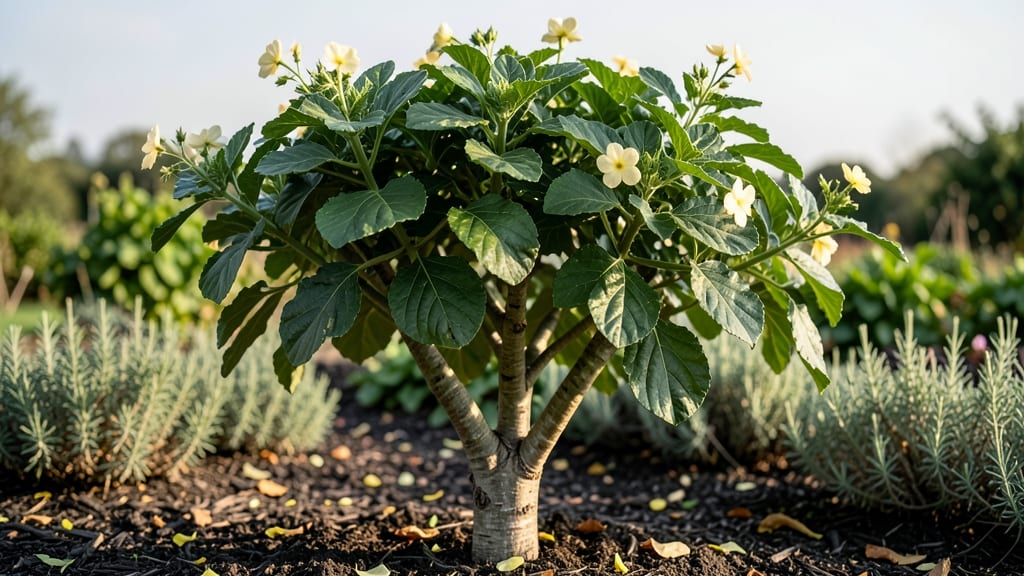
A mustard tree can grow between 15 and 30 feet tall, depending on whether it thrives in the wild or under your care.
If you're dreaming of a mustard tree 🌳 in your garden but wondering how tall it can soar, the answer depends on whether it thrives in the wild or under your care—and the difference might surprise you.
In their native tropical climates, these fast-growing trees can reach towering heights, while cultivated varieties in cooler zones like 6a often stay more manageable with proper pruning.
Below, I’ll break down how sunlight, soil, and seasonal care influence its height—and whether you can keep it compact or let it grow wild.


Natural height limits of wild mustard trees in their native habitat
When wild mustard trees (commonly Brassica species) grow in their native habitats, their height can vary dramatically based on environmental conditions. In the wild, these trees often reach their maximum potential height when given ideal growing conditions, such as rich soil and full sunlight.
Some species, like the sacred mustard tree (Brassica juncea), can grow surprisingly tall in their natural settings.
The natural height limits of wild mustard trees are influenced by factors like climate, soil quality, and competition for resources. In optimal conditions, wild mustard trees can grow between 10 to 20 feet tall, though some exceptional specimens may even exceed 25 feet in height.
This variation highlights how adaptable these trees are to their environments.
Native habitats often include regions with temperate climates, such as parts of Europe, Asia, and North America. In these areas, wild mustard trees thrive in open fields and disturbed soils, where they can spread their roots deeply and grow taller without competition from other plants.
One key factor affecting height is the species variation within the Brassica family. For example, wild cabbage (Brassica oleracea) tends to grow taller in the wild compared to mustard greens (Brassica juncea), which often stay shorter unless given ideal growing conditions.
Understanding these differences can help gardeners predict how tall their own mustard trees might grow.
In their native habitats, wild mustard trees also benefit from natural pruning through wind and animal interactions. This can limit excessive height growth, keeping the trees more manageable in size.
However, when these trees are cultivated in gardens, they often grow taller due to the absence of these natural constraints.
In their native habitats, wild mustard trees often grow taller than they do in cultivated settings because they face fewer restrictions. For example, Moringa oleifera, commonly known as the horseradish tree, can reach heights of 20 to 30 feet in tropical climates where it thrives naturally.
This species is particularly notable for its rapid growth and ability to adapt to diverse conditions.
The ecological factors influencing height include water availability, nutrient-rich soil, and lack of competition. In areas with abundant rainfall and fertile soil, wild mustard trees can grow much taller compared to regions with drought conditions or poor soil quality.
Gardeners can replicate these conditions to encourage taller growth in their own yards.
Another important consideration is the growth rate of wild mustard trees in their natural environments. Some species, like Brassica juncea, can grow up to 3 feet per year under ideal conditions. This rapid growth contributes to their ability to reach impressive heights when given the right resources and space.
If you're planning to grow a mustard tree in your garden, understanding its natural height limits can help you prepare for its potential size.
While wild mustard trees may not always reach their maximum height in cultivated settings, they can still grow quite tall with proper care and attention to their specific needs.
How cultivation techniques affect mustard tree height growth
The height of your mustard tree isn't just luck—it's a direct result of how you nurture it. In ideal conditions, these trees can reach 15-30 feet, but cultivation choices like pruning methods and soil quality can shrink or stretch that growth dramatically.
For example, aggressive pruning keeps them compact, while neglect can lead to wild, unruly growth patterns. Understanding these techniques helps you control whether your tree becomes a towering shade provider or a manageable garden centerpiece.
Let’s break down how three key cultivation factors—pruning, soil conditions, and climate—dictate your mustard tree’s height. Each plays a unique role in shaping its growth trajectory, and small adjustments can yield big results.
Whether you're aiming for a dwarf variety or a sky-scraping specimen, these insights will help you steer the growth in the right direction.
| Cultivation Technique | Effect on Height | Best For | Example Outcome |
|---|---|---|---|
| Regular Pruning (Annual) | Reduces height by 30-50% | Urban gardens, small yards | 8-12 ft after 3 years |
| Minimal Pruning (Biennial) | Allows natural growth, 15-25 ft possible | Rural properties, large landscapes | 20 ft in 5 years |
| Well-Draining Soil | Supports faster vertical growth by 20% | Arid climates, sandy soils | 30 ft in 7 years |
| Compacted or Poor Soil | Slows growth, max 10-15 ft | Urban containers, clay-heavy areas | 12 ft after 5 years |
| Full Sun Exposure | 3x growth rate in height | Open fields, south-facing yards | 25 ft in 4 years |
| Partial Shade | Limits height to 10-18 ft | Wooded areas, shaded patios | 15 ft after 6 years |
Pruning is your most powerful tool for controlling height. If you prune annually—cutting back 1/3 of new growth in late winter—you’ll keep your tree at a manageable 8-12 feet. Skip pruning, and it may bolt upward to 20+ feet in just a few years.
For instance, my neighbor’s unpruned mustard tree now towers over his two-story home, while mine stays neatly at 10 feet thanks to regular trimming.
Soil quality makes a surprising difference too. Mustard trees thrive in well-draining, slightly acidic soil (pH 6.0-7.5). Amend heavy clay with compost to prevent root stress, which stunts growth.
I once saw a mustard tree in a compacted urban soil grow only 5 feet in 3 years, while a neighbor’s tree in loamy soil hit 12 feet in the same time—proof that soil isn’t just about survival, it’s about speed.
Climate control is the final piece of the puzzle. Mustard trees love warm, dry climates (USDA Zones 7-10) but can tolerate brief cold snaps. In cooler zones, growth slows dramatically, capping height at 10-15 feet.
If you’re in Zone 6, consider growing it in a container and overwintering indoors to maintain faster growth rates. My Zone 7 garden lets mine stretch toward 20 feet, while a friend’s Zone 5 tree maxes out at 12 feet.
Want a compact mustard tree? Combine annual pruning, well-draining soil, and a container for full control. Aiming for a statement piece? Skip pruning, ensure full sun, and let it reach its wild potential. The choice is yours—and your garden’s space will thank you.