
Pruning
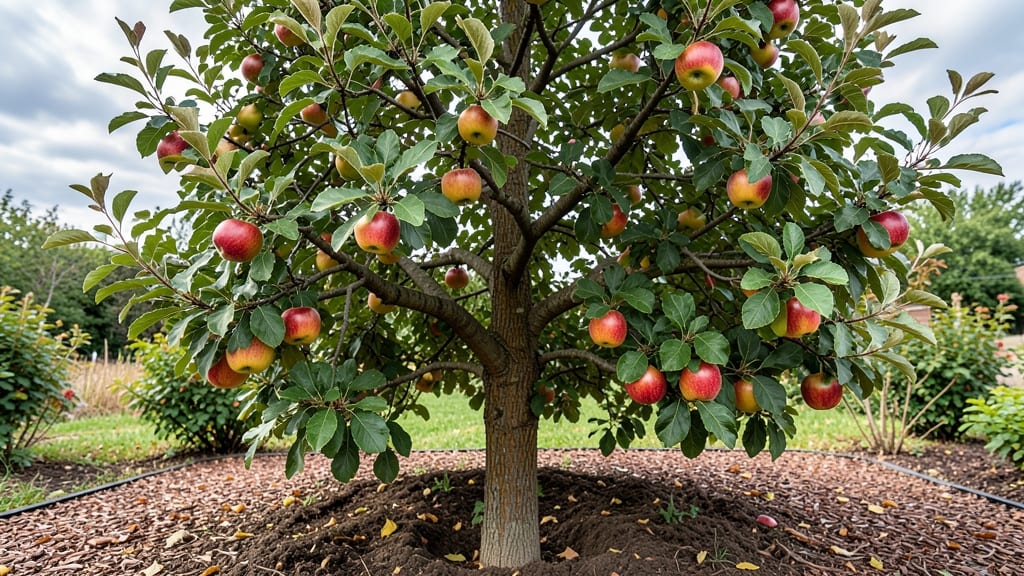
A Honeycrisp apple tree 🍎 can reach heights of 15 to 25 feet at maturity, making it a stunning but space-demanding addition to any yard.
If you’re dreaming of a backyard filled with juicy Honeycrisp apples but worried about space, you’re not alone—this popular variety can grow surprisingly tall. Whether you have acres or just a small urban plot, understanding its height and spacing needs is key to planning a thriving orchard.
The good news? With the right pruning techniques and rootstock choices, you can keep this tree more manageable. Dwarf varieties, for example, stay between 6 to 12 feet, while standard trees need plenty of room to spread.
In this guide, I’ll break down everything you need to know—from mature height expectations to spacing tips and pruning strategies—to help you grow Honeycrisp apples without sacrificing your garden layout.

How tall do Honeycrisp apple trees grow? Mature height & growth stages
When planning your backyard orchard, understanding Honeycrisp apple tree height is crucial. These trees are known for their juicy, sweet-tart fruit, but their mature size can vary dramatically depending on the rootstock.
Standard varieties can reach 15-25 feet tall, while dwarf options stay between 6-12 feet. Knowing these differences helps you choose the perfect fit for your space.
Your Honeycrisp apple tree won’t hit its full height overnight. In its first year, you’ll see just 2-4 feet of growth. By year two, it jumps to 6-10 feet, and by year three, it reaches 12-15 feet.
This rapid growth means careful planning is essential, especially if you’re working with limited backyard space.
| Growth Stage | Standard Height (ft) | Dwarf Height (ft) | Spacing Needs |
|---|---|---|---|
| Year 1 | 2-4 ft | 1-2 ft | N/A (Young sapling) |
| Year 2 | 6-10 ft | 3-5 ft | 10-15 ft apart |
| Year 3+ | 12-15 ft | 6-8 ft | 15-20 ft apart |
| Mature (5+ years) | 15-25 ft | 8-12 ft | 20-25 ft apart |
If you’re growing a standard Honeycrisp apple tree, expect it to tower over your house—20-25 feet tall at maturity. These trees need ample space for their spreading canopies, which can reach 15-20 feet wide.
For comparison, that’s roughly the height of a two-story building! This makes them ideal for rural properties but challenging for urban gardens.
For small-space gardeners, dwarf and semi-dwarf Honeycrisp varieties are game-changers. These trees top out at 6-12 feet tall, making them perfect for suburban backyards or even large containers.
The trade-off? They may produce slightly smaller fruit yields compared to full-size trees, but the convenience often outweighs this for many growers.
Pruning plays a critical role in managing your tree’s height. Regular pruning in late winter or early spring can keep your Honeycrisp apple tree 20-30% shorter than its natural growth potential. Focus on removing suckers and water sprouts to encourage a strong central leader.
Just remember: never prune more than 25% of the canopy in a single season to avoid stressing the tree.
Another factor affecting height is the rootstock used when growing your tree. Dwarf rootstocks like M.9 or B.9 restrict growth significantly, while semi-dwarf rootstocks like MM.106 or MM.111 allow for moderate height control. When shopping for a Honeycrisp tree, always check the rootstock description to predict mature size accurately.
When planning your orchard layout, consider tree spacing carefully. Standard Honeycrisp trees need 20-25 feet between trunks to prevent shading and disease. Dwarf varieties can be spaced 10-15 feet apart, making them ideal for small orchards or mixed plantings.
Proper spacing ensures each tree gets adequate sunlight and air circulation, which is essential for healthy fruit production.
For urban gardeners, consider espalier training to grow Honeycrisp apples vertically along a fence or wall. This technique can keep your tree’s height manageable while maximizing fruit production in tight spaces.
With espalier, you might grow a 6-foot-tall tree that produces just as much fruit as a 15-foot standard tree in an open field.
Remember that Honeycrisp apple trees are long-term investments. While they may take 3-5 years to reach maturity, their lifespan can exceed 20 years with proper care. Choosing the right size now will save you headaches—and potential tree removal costs—down the road.
Whether you opt for a towering standard or a compact dwarf, your Honeycrisp tree will reward you with years of delicious harvests.
Space-saving tips: how to grow Honeycrisp apples in small gardens
Even with limited space, growing Honeycrisp apples is totally doable! The key lies in choosing the right rootstock and training methods. Standard trees can reach 20-25 feet, but dwarf varieties stay under 8 feet, making them perfect for urban gardens.
With creative techniques, you can enjoy fresh Honeycrisp apples without sacrificing your patio or driveway.
For small spaces, dwarf rootstock like B.9 or G.41 are game-changers. These rootstocks keep the tree's mature height between 6-8 feet, while still producing full-sized apples. Pair this with espalier training, and you can grow multiple trees vertically along a fence or trellis, saving valuable ground space.
- Dwarf Rootstock: Keeps mature height at 6-8 ft (ideal for containers or small yards)
- Espalier Training: Flattens tree growth against walls/fences (saves 90% of ground space)
- Container Growing: Use 20-gallon pots with dwarf varieties (rotate annually for even growth)
- Multi-Tree Spacing: Plant 3 trees in 10x10 ft area using central leader + espalier combo
- Vertical Trellis: Train branches horizontally for easy harvesting and compact growth
If containers are your only option, opt for 5-gallon pots for young trees and upgrade to 15-gallon containers as they grow. Remember to use well-draining potting mix and fertilize monthly during growing season.
For best results, place containers in full sun locations and rotate them every few weeks to ensure even growth.
Another clever trick is the "3-tree orchard" method: plant one central tree surrounded by two espalier-trained trees on either side. This creates a balanced canopy while keeping the footprint small. Just ensure each tree has 8-10 feet of horizontal space between them for proper airflow and sunlight penetration.
Regular pruning is essential for maintaining size and shape. In late winter, remove water sprouts and thin out crossing branches. For espaliered trees, prune to maintain your desired pattern—whether it's a fan shape against a wall or a horizontal ladder along a fence.
This keeps your tree manageable while maximizing fruit production.
With these space-saving strategies, you can enjoy Honeycrisp apples even in the smallest yards. Start with dwarf rootstock, get creative with training methods, and soon you'll be harvesting sweet, crisp fruit without needing an acre of land! 🍏🪴