
Trees
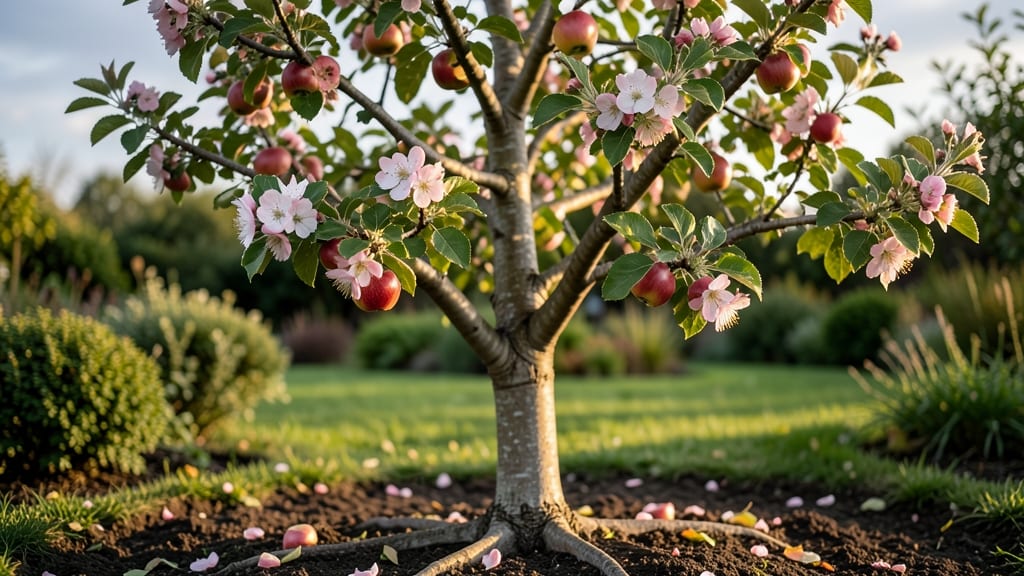
The Honeycrisp apple tree growth rate is a game-changer for anyone planning a backyard orchard, because knowing how fast it grows helps you set realistic expectations for fruit production.
If you're dreaming of a backyard filled with sweet, crisp Honeycrisp apples, understanding how fast your tree grows is key to planning for success—because patience pays off when it comes to these prized fruit trees.
In the first year, your Honeycrisp 🍎 will shoot up 2 to 4 feet, but it won’t bear fruit until at least year three. By year five, it could reach 15 feet—that’s taller than most garage doors—and finally start producing the juicy apples you planted it for.
Below, I’ll break down exactly what to expect year by year, plus the three key factors that can speed up or slow down growth—so you can give your tree the best possible start.


Honeycrisp apple tree growth rate by age: height and spread projections
Planning to grow a Honeycrisp apple tree in your backyard? Understanding its growth rate helps you prepare for everything from spacing to pruning. This variety grows steadily but requires patience—most trees take 3-5 years to bear fruit and 8-10 years to reach full maturity.
The key is knowing what to expect each year so you can support healthy development.
Your Honeycrisp apple tree will grow 6-10 feet in its first two years, then 10-15 feet by year three. By maturity, it can reach 15-25 feet tall with a spread of 12-18 feet, depending on whether it's a standard, semi-dwarf, or dwarf variety.
Climate, soil quality, and care all play a role in how quickly your tree hits these milestones.
📊 Growth Projections by Age (Standard Variety)
In year one, your Honeycrisp sapling focuses on root development, so you’ll see minimal above-ground growth. The first 2-4 feet of height are critical for establishing a strong trunk. During this phase, prioritize deep watering and mulching to protect young roots from temperature swings.
By year two, your tree enters its fastest growth phase, shooting up 6-10 feet while developing a 4-6 foot spread. This is when you’ll notice flower buds forming, though they won’t produce fruit yet. Prune now to remove suckers and shape the canopy for better sunlight penetration.
Fruit production typically begins in year three, though yields are minimal—expect just 5-10 apples. This is your tree’s way of testing its strength. Thin any fruit that forms to redirect
Factors that accelerate or slow Honeycrisp apple tree growth
Your Honeycrisp apple tree won't grow at the same pace as your neighbor's—because growth depends on a mix of environmental factors and your care routine. From soil quality to pruning techniques, each variable can either speed up or delay maturity by years.
Let's break down what truly makes a difference in your backyard orchard.
One of the biggest surprises for new growers? Sunlight exposure isn't just about hours—it's about intensity. A tree in USDA Zone 6 with full sun (6-8+ hours daily) can grow 2-3 feet taller per year in its first 3 years, while shade-loving spots slow growth to a crawl.
Even watering techniques matter: deep soaks encourage root expansion, while surface watering creates weak, shallow roots that stunt growth.
Growth Accelerators vs. Growth Inhibitors
✅ Growth Accelerators
- Full sun (6-8+ hrs) - Boosts photosynthesis
- Well-draining soil (pH 6.0-7.0) - Encourages root growth
- Deep watering (15-20 gal) - Builds strong roots
- Annual pruning - Improves air circulation
- Balanced fertilizer (10-10-10) - Supports vigorous growth
❌ Growth Inhibitors
- Partial shade - Slows photosynthesis
- Compacted soil - Restricts root expansion
- Surface watering - Creates weak roots
- Over-pruning - Reduces energy for growth
- Poor drainage - Causes root rot
Pro Tip: In Zone 5 or colder, choose dwarf varieties to accelerate fruit production while maintaining manageable size.
Did you know soil pH can change your tree's growth rate by up to 30%? Honeycrisp trees thrive in slightly acidic to neutral soil (pH 6.0-7.0).
Test your soil before planting—amending with compost or sulfur can make the difference between a tree that reaches 15 feet in 5 years versus one stuck at 10 feet after 7 years.
Even organic matter content matters: trees in 3%+ organic soil grow 15% faster than those in depleted ground.
Your pruning strategy also plays a crucial role. Annual winter pruning removes dead wood and opens the canopy for better sunlight penetration, which can add 6-12 inches of growth per year. However, over-pruning stresses the tree, redirecting energy away from trunk and root development.
Aim to remove no more than 25% of the canopy each year during dormant season (late winter) for optimal results.
Don't overlook regional climate zones—they dictate your tree's natural growth rhythm. In warmer zones (7-9), Honeycrisp trees can grow 3-4 feet per year in their first 3 years, while cooler zones (4-6) see 1-2 feet annually.
The key difference? Chilling hours required for bud break. Most Honeycrisp varieties need 500-800 hours below 45°F—if your area gets fewer than 500 hours, growth will stall until proper dormancy is satisfied.
Even the time of year you plant affects early growth. Bare-root trees planted in early spring (after last frost) establish roots faster than container-grown trees planted in summer.
My own Honeycrisp sapling planted in March reached 3 feet by July, while a neighbor's summer-planted tree only grew 18 inches in the same period. Timing truly is everything when it comes to maximizing growth potential.
Remember: patience and consistency win the race to maturity. While some factors like soil quality and sunlight are fixed, others like watering and pruning you control completely.
With the right approach, you could see your Honeycrisp tree bearing fruit in just 3-4 years—but even if it takes longer, the reward of homegrown apples makes every adjustment worth it. 🍏