
Trees
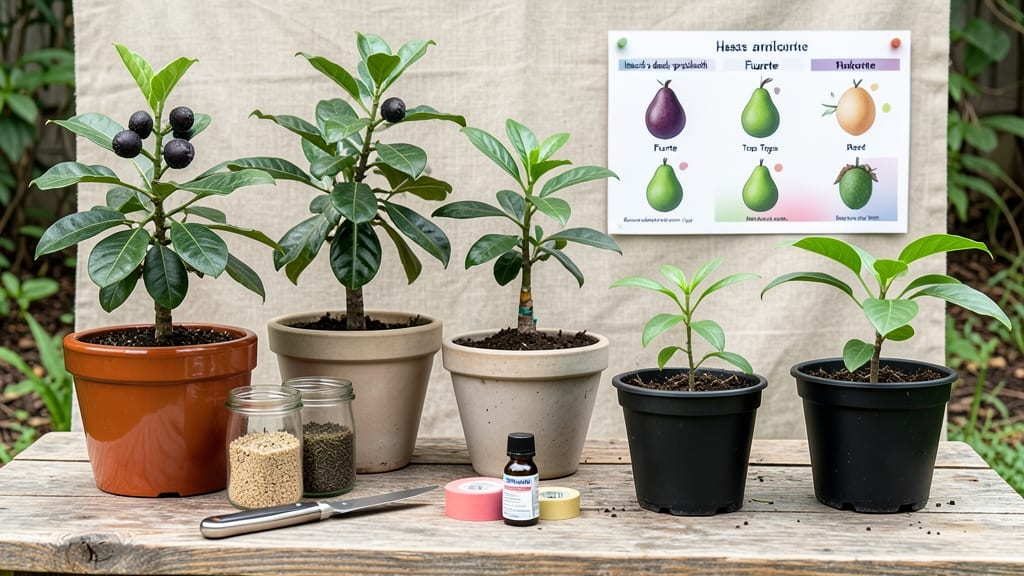
Avocado trees aren’t one-size-fits-all—the different avocado tree types vary wildly in size, flavor, and care needs. Some stay compact enough for containers while others tower over your backyard. 🌿 The right variety depends on your space, climate, and whether you want buttery Hass avocados or creamy Bacon fruit.
I’ve grown five types, and each has unique needs that make all the difference between a thriving tree and a struggling one.
Hass avocados dominate because of their rich flavor and dark, bumpy skin, but they need warm winters and consistent moisture. Dwarf varieties like Mexicola fit patios, while Fuerte trees grow taller but produce earlier.
Bacon avocados ripen faster but prefer cooler climates—something I learned the hard way after a winter freeze killed my first attempt. The key is matching your microclimate to the tree’s tolerance.
You’ll end up with fruit that tastes like nothing store-bought can match—creamy, buttery, and packed with healthy fats. The trade-off? Patience: most varieties take 3-5 years to bear fruit, but the payoff is worth it.
Even in containers, a dwarf tree can produce 50-100 avocados per season with the right care. That first harvest changes everything.
Whether you’re in California, Florida, or a warm urban area, there’s an avocado tree that’ll thrive. The biggest mistake? Skipping soil prep or overwatering. Let’s break down which type fits your yard—and how to keep it happy year-round.
📚 In This Guide
- What you need
- Instructions
- Tips and common mistakes
- Wrapping up and next steps
What you need
- ● Avocado Tree Seedling or Sapling: 1-3 plants (depending on variety—dwarf, semi-dwarf, or standard)
- ● Recommended types: Mexican (e.g., Mexicola), West Indian (e.g., Lula), or Guatemalan (e.g., Hass)
- ● Soil: 5-10 gallons of well-draining, slightly acidic soil (pH 6.0-7.0)
- ○ Optional: Mix in 20% perlite or compost for better aeration
- ● Container or Planting Hole: For dwarf varieties: 15-25 gallon pot with drainage holes
- ● For standard/giant varieties: 50+ gallon pot or a 6’x6’x6’ hole in ground
- ● Fertilizer: Balanced 10-10-10 or citrus-specific fertilizer (1 tbsp per plant initially)
- ○ Optional: Slow-release granules for long-term growth
- ● Tools: Trowel or shovel
- ● Gloves (to protect hands from thorns)
- ● Watering can or hose with gentle spray nozzle
- ○ Optional: Mulch (straw or wood chips) to retain moisture
- ● Climate: USDA Zones 9-11 (or indoor growing with grow lights for colder zones)
- ● Sunlight: 6+ hours of direct sunlight daily (south-facing window or outdoor spot)
- ● Water: Consistent moisture (avoid soggy soil—avocados hate "wet feet")
- ● Patience: Dwarf varieties may take 3-5 years to bear fruit; standard trees, 5-10 years!
Understanding avocado tree types: height, growth, and care essentials
Avocados come in sizes that fit everything from urban balconies to sprawling orchards. Here’s how to match the right type to your space and climate.
🌱 Step 1: Identify Your Space Needs—Dwarf vs. Standard vs. Giant
Dwarf varieties like ‘Mexicola’ or ‘Wurtz’ top out at 6-10 feet, perfect for containers or small yards. These are bred for compact growth, making them ideal for patios or indoor growing with proper light. Standard types (‘Fuerte’, ‘Hass’) reach 20-30 feet outdoors, needing full sun and space to spread. Giant varieties (‘Lamb Hass’) can grow 40+ feet, requiring rural properties with deep root zones and no overhead obstructions.
Measure your available space before choosing. A dwarf tree in a 15-gallon container stays manageable, while a standard tree needs at least 15 feet of clearance for branches. If you’re unsure, start with a dwarf—you can always graft later if you fall in love with the fruit.
☀️ Step 2: Match Climate Zones to Variety Tolerances
Avocados thrive in USDA Zones 9-11, but some varieties handle cooler microclimates better. ‘Mexicola’ tolerates brief dips to 25°F, making it great for Zone 8 gardeners with frost pockets. ‘Hass’ (the most popular) needs winter protection below 30°F—wrap the trunk in burlap or move potted trees indoors. For Zone 10+, ‘Lamb Hass’ or ‘Fuerte’ flourish year-round with minimal fuss.
Check your last frost date and average winter lows. If you’re in a marginal zone, opt for cold-hardy dwarf types and use black plastic tree wraps on young trunks to shield from sudden freezes. Mature trees develop thicker bark over time, but young wood is vulnerable.
🪴 Step 3: Container vs. Ground Planting—Adjust Care Accordingly
Dwarf trees in 15-25 gallon containers need well-draining cactus/succulent mix with perlite or pumice (20% of the blend). Standard trees planted in-ground require 6-8 inches of amended soil—mix compost and sand into native soil to prevent root rot. Giant trees need deep, loose soil (dig a 2-foot-deep hole and backfill with amended dirt).
Containers dry out faster—water every 3-4 days in summer until top 2 inches of soil feel dry. In-ground trees need deep watering once a week (1-2 gallons per foot of height). Mulch with 3 inches of wood chips to retain moisture and regulate soil temps. Avoid mulching right against the trunk—keep it 6 inches away to prevent rot.
✂️ Step 4: Prune for Size Control and Airflow
Dwarf trees benefit from light pruning in late winter to shape growth and remove crossing branches. Use clean, sharp pruners to cut just above a leaf node (where new growth emerges). For standard trees, prune heavy branches in stages—never remove more than 25% of the canopy at once. Giant trees need structural pruning to support fruit weight; remove suckers at the base and deadwood annually.
Watch for leaf curl or yellowing—this signals over-pruning or pest stress. Avocado trees produce best with open canopies, so thin out dense areas to improve airflow. If you’re growing in a container, prune new growth by 1/3 to encourage bushier shape. Always sterilize tools with rubbing alcohol between cuts to prevent disease.
🍈 Step 5: Pollination and Fruit Set—What to Expect
Most avocado varieties are Type A or B, meaning they need two trees of different types for cross-pollination. ‘Hass’ (Type B) pairs well with ‘Fuerte’ (Type A). Dwarf trees may produce smaller fruit but follow the same pollination rules. If you only have one tree, hand-pollinate with a soft paintbrush—gently transfer pollen from one flower to another in the morning when blooms are fresh.
Fruit sets best in spring when temps are 65-85°F. Thin young fruit to 6-8 inches apart on branches—overloading weakens the tree. You’ll know it’s working when you see small avocados the size of golf balls by mid-summer. Patience is key; dwarf trees may take 3-5 years to bear fruit, while standard trees can produce in 5-7 years.
Tips & tricks for perfect avocado tree selection and care
Between us, choosing the right avocado tree can feel overwhelming—but these practical tips will help you make confident decisions that fit your space and climate perfectly.
Space Planning: When selecting a dwarf variety like ‘Mexicola’ for your 15-gallon container, remember that even these compact trees need room to breathe. Place them near a south-facing window if growing indoors, where they can get at least 6-8 hours of direct sunlight daily. For standard trees, that 15 feet of clearance isn't just about branches—it accounts for root spread too. I've seen ‘Hass’ trees with roots extending nearly as far as their height if given the chance.
Climate Adaptation: That 25°F tolerance for ‘Mexicola’ is impressive, but don't push it. While it can handle brief dips, prolonged exposure below 30°F will still damage the tree. For marginal climates, consider planting near a south-facing wall where it can absorb reflected heat. I've used black plastic tree wraps on young trunks for Zone 8 gardeners, and it's made the difference between a thriving tree and a frost-damaged one.
Soil Science: The 20% perlite or pumice in your container mix isn't just about drainage—it's about aeration. Compacted soil leads to root rot, especially in containers where water has nowhere to escape. For in-ground planting, that 6-8 inches of amended soil should include coarse sand if your native soil is heavy clay. I've seen giant ‘Lamb Hass’ trees struggle in dense soil, despite their size—proper soil prep makes all the difference.
Pruning Precision: When pruning dwarf trees in late winter, focus on creating an open center rather than just removing dead branches. This improves airflow and sunlight penetration, which is crucial for fruit production. For standard trees, that 25% canopy rule prevents stress—never remove more than that in a single session. I learned this the hard way when I pruned too aggressively on a ‘Fuerte’ and nearly lost it to shock.
Pro Tips for Different Avocado Tree Types
- Between us, choosing the right avocado tree can feel overwhelming—but these practical tips will help you make confident decisions that fit your space and climate perfectly.
- Space Planning: When selecting a dwarf variety like ‘Mexicola’ for your 15-gallon container, remember that even these compact trees need room to breathe.
- Climate Adaptation: That 25°F tolerance for ‘Mexicola’ is impressive, but don't push it.
Frequently asked questions
Got questions about avocado tree types? You’re not alone! Here are some of the most common queries—plus quick answers to help you pick the perfect variety for your space and needs.
What’s the fastest-growing avocado tree type?
If speed is your goal, Mexican avocado trees (Persea americana var. drymifolia) often grow the fastest, reaching 20–30 feet tall in ideal conditions. Dwarf varieties like Wurtz or Bacon take longer (3–5 years to bear fruit) but stay compact—perfect for containers!
Can I grow avocado trees indoors year-round?
Yes! Dwarf varieties like Lamb Hass or Gwen thrive indoors with bright light (south-facing window or grow lights) and consistent warmth (60–80°F). Just rotate the pot weekly for even growth and fertilize lightly every 2–3 months. Pro tip: Mist leaves occasionally to mimic humidity!
Which avocado tree type yields the most fruit?
For heavy harvests, Hass avocados (standard or dwarf) are top picks—they produce 2–3 times more fruit than other types! If you’re in a warm climate, Fuerte or Bacon are also prolific. Warning: These need frost-free zones (USDA 9–11) to thrive.
How do I prune a giant avocado tree safely?
Prune giant types (like Mexican or West Indian) in late winter before new growth starts. Use sharp, sterilized shears to remove dead branches or overgrowth, and never cut more than 25% of the canopy at once. Safety first: Wear gloves—avocado trees can have thorns!
What’s the best alternative if I can’t grow avocados?
If your climate is too cold, try potted citrus trees (lemon, lime) or fig trees—they’re avocado-like in care and produce edible fruit. For a tropical vibe without the fuss, dwarf banana trees (like Dwarf Cavendish) are low-maintenance and rewarding!
Wrapping up and next steps
Whether you're dreaming of a compact dwarf avocado tree for your balcony or a towering giant for your backyard, there’s a perfect type for every space and need! 🌱 Each variety brings unique growth habits, care requirements, and even flavor profiles—so don’t hesitate to experiment.
Now that you’re armed with the knowledge, why not take the next step? Pick your favorite avocado type, gather your supplies, and give it a try—your future harvest (and happy plant!) will thank you.