
Pruning
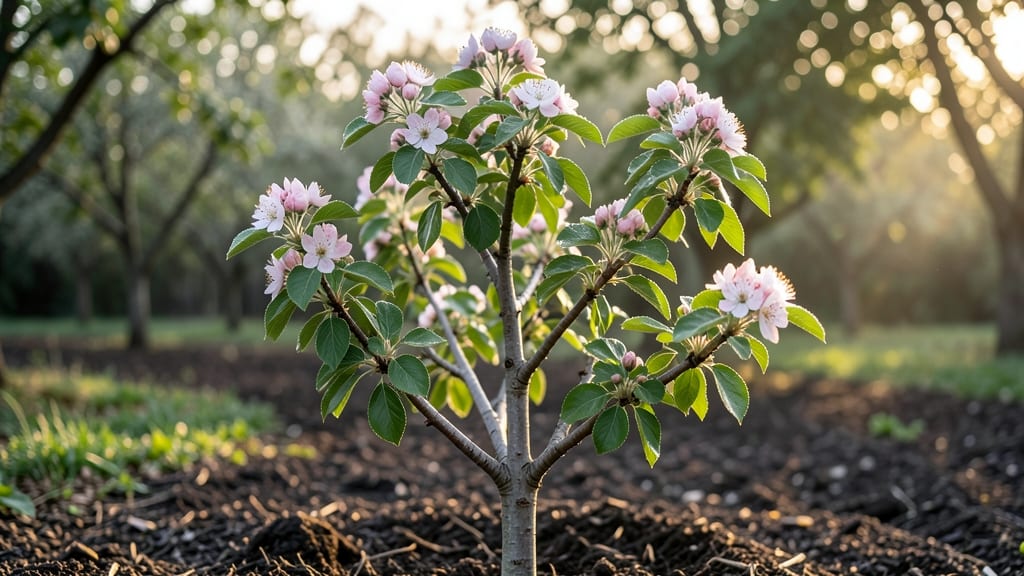
Your young crabapple tree's future starts with the first cut. ✂️ The first three years are when you shape its structure and set it up for decades of blooms, but most gardeners either prune too much or too little—both can stunt growth or invite disease.
I learned the hard way that crabapples need open centers and strong branches from day one. Start by removing any crossing branches or weak limbs—these compete for energy your young tree needs to establish roots.
Use clean, sharp pruners and cut just outside the branch collar to avoid leaving stubs that rot.
By summer's end, you'll see a tree with a balanced canopy and fewer weak spots. The key is light pruning—just enough to encourage airflow and sunlight penetration. Too much now means fewer blooms later, and too little risks crowded branches that break under winter snow.
This method works for any young crabapple variety, whether you planted it in spring or fall. The first year is about observation—just remove dead wood and shape the basic form. By year three, you'll be fine-tuning for that perfect, sturdy silhouette.
📚 In This Guide
- What you need
- Instructions
- Tips and common mistakes
- Wrapping up and next steps
What you need
- ● Pruning shears: Bypass pruners (sharp, 6-8 inch blades) for small branches (under ½ inch thick). Must be sterilized with rubbing alcohol or a 10% bleach solution.
- ● Loppers: 1 pair (8-10 inch blades) for branches ½ to 1½ inches thick.
- ● Pruning saw: Curved-tooth handsaw for branches 1½+ inches thick.
- ● Gloves: Heavy-duty leather or nitrile-coated gloves (protects from thorns and sap).
- ● Disposable pruning bags: 1-2 (for collecting debris).
- ● Rubbing alcohol (70%+) or bleach (10% solution): For sterilizing tools between cuts.
- ○ Tree wound dressing (optional but recommended): Pruning sealant (e.g., Tanglefoot Tree Wound Pruning Sealant).
- ● Ladder or step stool: If tree exceeds 6 feet in height.
- ● Notebook & pencil: To sketch your pruning plan and track progress.
- ● Extension pole pruners: For hard-to-reach branches (if tree is tall).
- ● Safety glasses: Protects eyes from debris.
- ● Work boots with ankle support: For stability on uneven ground.
- ● Spray bottle with water: Keeps tools clean and sap from sticking.
- ● Camera/phone: Document "before" and "after" shots for reference.
- ● Choose a dry, sunny day (avoid pruning when branches are wet or frozen).
- ● Work during the tree’s dormant season (late fall/winter) for minimal stress.
- ● Have a clear pruning plan (refer to your sketched diagram).
- ● Ensure the tree is healthy and pest-free (no signs of disease or infestation).
Instructions for pruning young crabapple trees
Here’s how I prune young crabapples to build strong structure and prevent common issues.
✂️ Step 1: Identify and Remove Dead or Damaged Branches
Start by scanning the tree for branches that are broken, diseased, or dead—these are easy to spot because they’re brown, brittle, or lack leaves. Use sharp pruning shears to cut these back to a healthy bud or branch collar. I always make clean cuts at a 45-degree angle just outside the branch collar to prevent water from pooling and rotting the wound.
If a branch is only partially dead, check for green tissue beneath the bark. If you find living tissue, leave it—it might recover. But if the entire branch is dead, remove it completely. This step keeps your tree healthy and prevents pests from moving into weak areas.
✂️ Step 2: Thin Out Crowded or Crossing Branches
Next, look for branches that are rubbing against each other or growing too close together. These often create weak spots where bark can tear or wounds can form. Use your pruning shears to remove the smaller, weaker branch at its base. I like to step back and look at the tree from all sides—this helps me spot branches that are blocking sunlight or growing inward.
If two branches are crossing, remove the one that’s growing downward or is in the shade. This ensures the tree develops a strong, open canopy. Thin out about 20-30% of the branches in this step—don’t overdo it, or you’ll stress the tree.
✂️ Step 3: Shape the Tree for Strong Structure
Now, focus on shaping the tree to encourage a balanced, sturdy form. Start by selecting 3-5 main branches that are evenly spaced around the trunk. These will become the primary scaffold. Remove any competing branches that grow straight up from the trunk—these are called "water sprouts" and weaken the tree’s structure.
For the main branches, make sure they’re spaced 8-12 inches apart and grow at a slight angle (about 45 degrees from the trunk). If a branch is growing too upright, you can gently bend it downward while it’s still young and flexible. Avoid heavy pruning of these branches—just trim back any excessive growth to maintain their shape.
⏰ Step 4: Prune for Airflow and Light Penetration
Finally, check for branches that are blocking airflow or preventing sunlight from reaching the center of the tree. These often grow inward or are too dense. Thin out these branches to improve airflow, which reduces the risk of fungal diseases. Aim to keep the center of the tree open and airy—this is key for long-term health.
If you’re unsure whether a branch needs to go, ask yourself: Does this branch add to the tree’s structure, or is it just taking up space? If it’s the latter, remove it. Prune during late winter or early spring before new growth starts—this gives the tree time to heal before the growing season begins.
Tips & tricks for pruning young crabapple trees
Here's what I've learned after shaping dozens of young crabapples—these details make all the difference in long-term tree health.
Branch Angle Matters: When shaping your tree in Step 3, aim for those main branches to grow at about 45 degrees from the trunk. This angle helps prevent storm damage later on by distributing weight more effectively. I've seen too many trees with branches growing straight up ("water sprouts") that snap in strong winds—these are the ones to remove completely at the base.
Timing is Everything: The instructions mention late winter or early spring, but I recommend pruning on a dry, cloudy day if possible. This minimizes stress on the tree and reduces the risk of disease entering through fresh cuts. If you must prune on a sunny day, do it in the morning so the tree has time to recover before afternoon heat.
Tool Prep Prevents Problems: Before you start, sharpen your pruning shears and disinfect them with rubbing alcohol. Dull blades tear bark instead of making clean cuts, which slows healing. I also keep a small bottle of pruning sealant handy for larger cuts over ½-inch thick—this helps prevent disease entry, though it's optional for small branches.
Visual Check for Airflow: In Step 4, when checking for branches that block airflow, imagine standing in the center of the tree. If you can't see at least 3-4 feet into the canopy from all directions, you likely need to thin more. This open structure prevents fungal issues and lets sunlight reach all parts of the tree for even growth.
Pro Tips for Crabapple Tree Young
- Here's what I've learned after shaping dozens of young crabapples—these details make all the difference in long-term tree health.
- Branch Angle Matters: When shaping your tree in Step 3, aim for those main branches to grow at about 45 degrees from the trunk.
- Timing is Everything: The instructions mention late winter or early spring, but I recommend pruning on a dry, cloudy day if possible.
Frequently asked questions
Got questions about nurturing your young crabapple tree? You’re not alone! Here are answers to the most common concerns—from pruning timing to troubleshooting—so you can keep your tree thriving in its first three years.
How soon after planting should I prune my young crabapple tree?
Prune your young crabapple tree right after planting (within 1–2 weeks) to remove any damaged branches and shape it for growth. Avoid heavy pruning in the first year—focus on cleaning up and promoting a strong structure. Pro tip: Use sterilized tools to prevent disease!
When is the best time of year to prune a young crabapple tree?
The ideal time is late winter or early spring (just before buds swell) when the tree is dormant. Avoid pruning in fall—this can encourage new growth that won’t harden off before winter. For minor adjustments, summer pruning is fine, but keep it light to avoid stressing the tree.
What should I avoid when pruning a young crabapple tree?
Avoid these common mistakes:
- Over-pruning: Never remove more than 25% of the tree’s foliage in one session.
- Topping: Cutting back to a stub encourages weak growth and disease.
- Pruning in wet weather: Moisture spreads bacteria and fungus.
- Ignoring dead wood: Always remove diseased or broken branches immediately.
Can I use the same pruning techniques for a young crabapple as for a mature tree?
No—young crabapple trees need gentler, more frequent pruning to establish a strong framework. Focus on:
- Removing water sprouts (shoots growing straight up).
- Thinning out crowded branches for airflow.
- Avoiding heavy cuts that could stress the tree.
My young crabapple tree has yellow leaves after pruning. Is this normal?
Mild yellowing is often normal after pruning, especially if it’s just a few leaves. However, if most leaves turn yellow or drop prematurely, check for:
- Over-pruning (too much foliage removed).
- Underwatering or poor drainage.
- Pests (like aphids or spider mites) or disease (like fire blight).
Wrapping up and next steps
Growing a young crabapple tree is a rewarding journey, and with the right pruning techniques, you’ll set the stage for a stunning, healthy tree for years to come. 🌱 Remember, the first three years are all about shaping, not shaping up—focus on removing dead wood, opening the canopy, and encouraging strong branch structure.
Now that you’re armed with the know-how, grab those pruners and give your little tree the care it deserves!
Ready to take the next step? Mark your calendar for seasonal pruning sessions—spring and summer are your best friends for young crabapples. And if you’re feeling adventurous, consider exploring organic fertilizers to boost growth naturally. Happy pruning!