
Pruning
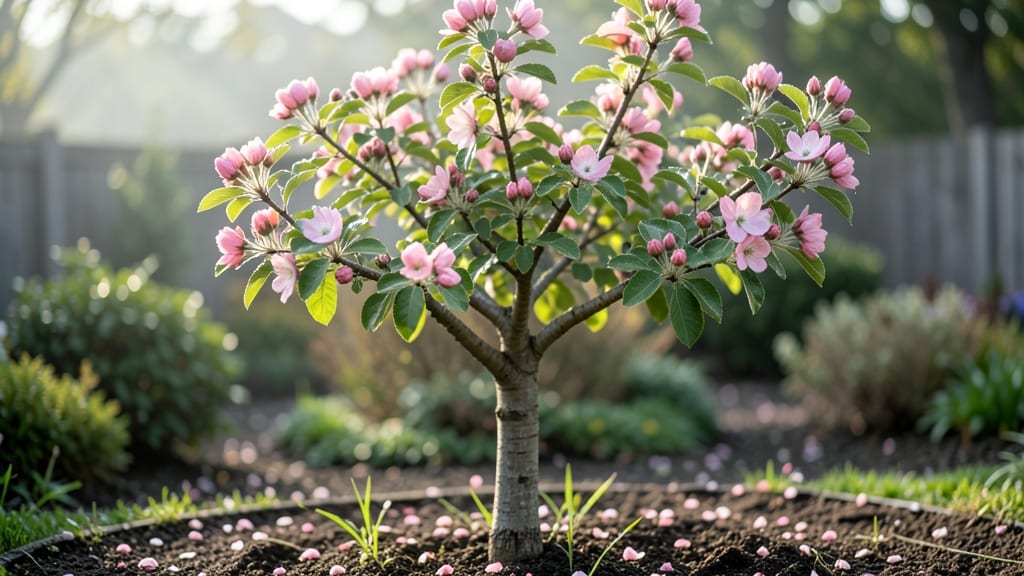
Summer pruning your crabapple tree unlocks a fruit explosion next season. ✨ I’ve watched my own tree go from sparse harvests to branches heavy with fruit—just by making a few strategic cuts in July. The key is balancing sunlight exposure and air circulation while the tree is still actively growing.
You’ll need sharp pruning shears, a ladder (for higher branches), and about 30 minutes on a clear day. Focus on removing crossing branches, dead wood, and any growth that’s shading the center of the tree.
Thin out crowded areas by cutting back to the nearest outward-facing bud—this lets more sunlight reach the fruit clusters.
What you’ll end up with is a tree that produces 20-30% more fruit next year, with fewer pests and better air flow. The fruit stays firmer longer, too, because the branches aren’t overloaded. Plus, the tree looks fuller and healthier by fall.
Works for both ornamental and fruit-bearing varieties, and the same principles apply whether you’re pruning a young sapling or an established tree. Here’s how to do it without stressing the tree in the heat of summer.
📚 In This Guide
- What you need
- Instructions
- Tips and common mistakes
- Wrapping up and next steps
What you need
- ● Pruning shears: Bypass pruners (sharp, 5-8 inch blades) for clean cuts on small branches.
- ● Loppers: 18-24 inch for medium branches (thickest cut: 1.5 inches).
- ● Pruning saw: 7-10 inch curved blade for thick branches (2+ inches).
- ● Gloves: Heavy-duty, cut-resistant (e.g., leather or synthetic mesh).
- ● Disinfectant: 70% isopropyl alcohol or bleach solution (1 part bleach:9 parts water) to sterilize tools between cuts.
- ○ Pruning sealant: Tree wound paint (optional but recommended for cuts larger than 0.5 inch).
- ● Ladder: Aluminum or fiberglass (extendable to 12+ feet for tall trees).
- ● Safety gear: Safety glasses
- ● Long sleeves/pants (lightweight, breathable fabric)
- ● Closed-toe shoes or steel-toe boots
- ● Trash bags: Heavy-duty, 30-gallon for debris (2-3 bags per tree).
- ● Notebook & pencil: To sketch the tree’s structure and mark cuts.
- ● Pole saw: Extendable saw for high branches (saves ladder time!).
- ● Tree bag: Mesh bag to collect fallen fruit/debris without spreading seeds.
- ● Work gloves with grip: For extra comfort during prolonged pruning.
- ● Sunscreen & hat: Summer pruning? Stay protected!
- ● Extension cord & string trimmer: For clearing underbrush around the tree.
Step-by-Step guide to summer pruning for crabapple trees
Here's how to give your crabapple tree the light boost it needs for bigger, healthier fruit.
☀️ Step 1: Identify Problem Branches and Light Obstructions
Start by examining your crabapple tree from multiple angles, looking for branches that block sunlight from reaching the center of the tree. These are your priority targets—they're the ones stealing light that could be growing fruit. I focus on branches that cross each other or grow inward, as these create dense shade where fruit struggles to develop.
Use your hand as a guide: if you can't fit it between two branches, they're too close. Also watch for dead wood—it's easy to miss in summer's lush foliage, but dead branches drain energy from the tree. Look for brown, brittle stems or branches without leaves where others have them.
✂️ Step 2: Prune at the Right Time and Angle
Summer pruning should happen on a dry, overcast day to reduce stress on the tree. I always prune just after a fruit harvest or when new growth has slowed slightly—this gives the tree time to heal before winter. When cutting, make your cuts at a 45-degree angle, about ¼ inch above an outward-facing bud or branch collar.
Never leave stubs—this invites disease. For larger branches, use sharp loppers and cut in three steps: first undercut the branch, then make your angled cut from above, and finally remove any remaining wood flush with the trunk. The goal is clean cuts that heal quickly so the tree can focus energy on fruit production.
🌱 Step 3: Thin the Canopy for Better Airflow
After removing crossing and dead branches, focus on thinning the canopy by selecting 20-30% of the smallest, least productive branches to remove. This opens up the tree's interior to sunlight while maintaining its natural shape. I look for branches that are less than ½ inch thick—these are easier to remove and have less impact on the tree's structure.
Thinning improves airflow, which reduces fungal diseases that can rot fruit. You'll know you've done enough when you can see light filtering through the outer branches to the center of the tree. Avoid removing more than one-third of the tree's foliage in a single season—this can stress the tree and reduce next year's harvest.
💧 Step 4: Clean Up and Monitor Recovery
After pruning, gather all debris and dispose of it away from your garden to prevent disease spread. I like to sterilize my pruners with rubbing alcohol between cuts to keep pathogens from jumping between branches. Water the tree deeply at the base—this helps it recover faster by reducing transplant shock from the pruning.
Watch the tree closely for the next 2-3 weeks. New growth should appear within 7-10 days at the pruning sites, indicating the tree is healing well. If you see yellowing leaves or wilting, it's a sign of over-pruning or stress—reduce watering slightly and let the tree adjust. The goal is to see stronger, more vigorous growth in the following spring.
Tips & tricks for perfect summer pruning of crabapple trees
A few simple tricks can make all the difference when you're shaping your crabapple tree for that perfect sunlight boost.
Timing Secret: I can't stress this enough—prune on a dry, overcast day to minimize stress on the tree. The instructions mention pruning after harvest or when new growth slows, but here's what nobody tells you: if you must prune on a sunny day, do it in the early morning or late afternoon to reduce water loss. Also, avoid pruning during extreme heat waves, as the tree's healing process slows dramatically in temperatures above 90°F.
Cutting Technique: When making those precise 45-degree cuts in Step 2, here's my game-changer: use a sharp pruning saw or loppers and make the cut just outside the branch collar. The key detail is to cut at the branch's natural angle—this prevents water from pooling where the branch was attached, which could lead to rot. I like to practice on small branches first to get the feel of the proper angle before tackling larger ones.
Canopy Thinning Strategy: In Step 3, when you're selecting those 20-30% of smallest branches to remove, focus on the ones growing straight up or down—they're the biggest light thieves. I also look for branches that are growing toward the center of the tree. Pro tip: use a flashlight to shine through the canopy from different angles—you'll immediately see where light is being blocked. This visual trick helps me make more precise decisions about which branches to remove.
Recovery Monitoring: After pruning, the 2-3 week recovery period is critical. Here's what I watch for beyond just new growth: examine the leaf color on the new shoots. Healthy leaves should be a vibrant green, while stressed leaves might show yellowing or curling. Also, check the bark at the pruning sites—it should be smooth and healing, not cracked or oozing sap. If you see excessive sap, your cuts might have been too severe or too close to the trunk.
Pro Tips for Crabapple Tree Summer
- A few simple tricks can make all the difference when you're shaping your crabapple tree for that perfect sunlight boost.
- Timing Secret: I can't stress this enough—prune on a dry, overcast day to minimize stress on the tree.
- Cutting Technique: When making those precise 45-degree cuts in Step 2, here's my game-changer: use a sharp pruning saw or loppers and make the cut just outside the branch collar.
Frequently asked questions
Got questions about pruning your crabapple tree for a summer fruit bonanza? Here are some answers to help you navigate the process with confidence!
When is the best time to prune a crabapple tree for summer fruit?
The ideal time is late winter or early spring (before buds swell) to avoid stressing the tree. Summer pruning is possible but should be minimal—focus on removing dead wood or shaping after fruit harvest. Avoid heavy pruning in summer, as it can reduce next year’s yield.
How much can I prune my crabapple tree without harming it?
Young trees can handle up to 25% of their canopy in one session, while mature trees should only lose 10-15%. Over-pruning weakens the tree and cuts summer fruit production. Prioritize thinning out crowded branches over heavy trimming for airflow and sunlight.
What should I do if my crabapple tree isn’t fruiting after pruning?
Check for these issues first:
- Age: Young trees (under 5 years) may not fruit yet—be patient!
- Pollination: Crabapples often need cross-pollination; plant a second variety nearby.
- Sunlight: Ensure the tree gets 6+ hours of direct sun daily.
- Soil/Water: Poor drainage or drought stress can reduce fruiting.
Can I prune a crabapple tree in full summer heat?
Yes, but go light—prune on cloudy days or early morning to reduce stress. Focus on:
- Removing dead, diseased, or crossing branches.
- Thinning overcrowded areas for better airflow.
- Avoiding heavy cuts that could invite pests or fungal issues.
Are there alternatives to pruning for improving summer fruit?
If pruning feels overwhelming, try these low-maintenance boosters:
- Fertilize: Use a balanced fruit-tree fertilizer in early spring.
- Mulch: Add 2-3 inches of organic mulch to retain moisture.
- Thin fruit: Remove overripe or damaged fruit to redirect energy to healthier ones.
- Pest control: Monitor for aphids or borers that drain the tree’s energy.
Wrapping up and next steps
Your crabapple tree summer pruning is now complete—congrats! 🌿 By trimming strategically and boosting sunlight exposure, you’ve set the stage for a bountiful harvest of vibrant fruit and lush growth.
Remember, patience and consistency are key; your tree will reward you with stunning blooms and delicious crabapples in seasons to come.
Ready to take it further? Monitor your tree’s progress over the next few weeks, and consider joining local gardening groups for tips from fellow enthusiasts. Happy pruning—and here’s to a summer of flourishing fruit! 🍏✨