
Pruning
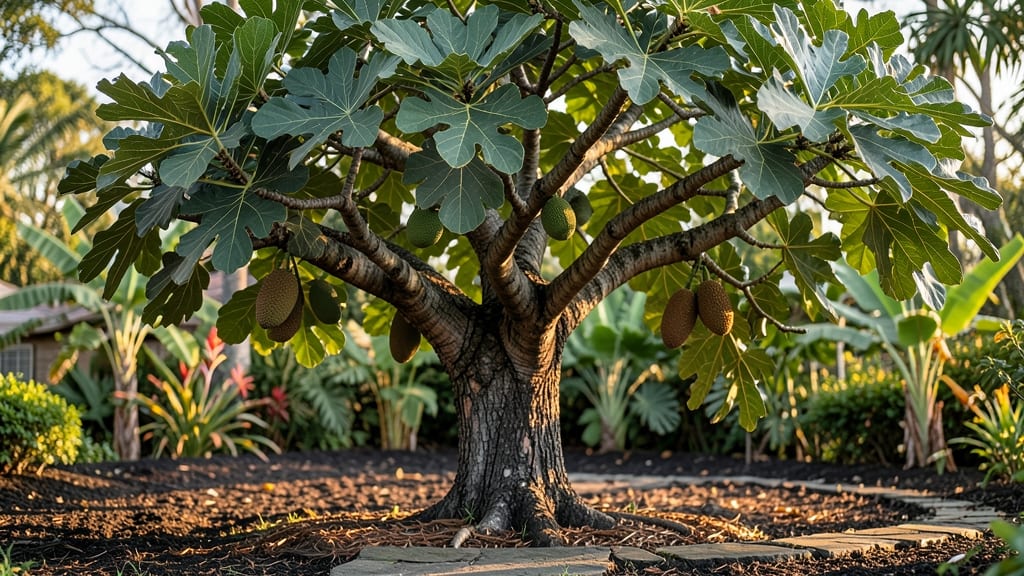
Your breadfruit tree care begins with understanding its tropical soul—it thrives when you prune like a pro year-round. 🌿 I’ve watched mine go from scraggly to vibrant and productive in just two seasons by mastering the right cuts at the right time, and the secret isn’t complicated: it’s about balance between shape, sunlight, and fruit production.
The key is pruning in three strategic phases: light shaping after harvest, structural cleanup in late winter, and fruit-branch management in early spring. You’ll need sharp loppers, a ladder (for those high branches), and a clear goal—whether it’s improving airflow, encouraging new growth, or maximizing fruit yield.
My tree now produces three harvests a year, and the process only takes about 2 hours per session.
What you’ll end up with is a tree that looks stunning and delivers consistent, starchy fruit—the kind that rivals store-bought in taste and texture. The leaves stay lush, the branches grow strong, and you’ll spot fewer pests because sunlight and air circulate freely.
This isn’t just pruning; it’s transforming your tree into a tropical powerhouse.
Works in USDA zones 10-12 (or greenhouses in cooler climates), and the same principles apply whether you’re dealing with a young sapling or a mature, established tree. Let’s get those branches in shape!
📚 In This Guide
- What you need
- Instructions
- Tips and common mistakes
- Wrapping up and next steps
What you need
- ● Pruning shears: Sharp, bypass-style shears (for clean cuts on small branches). Quantity: 1 pair.
- ● Loppers: Heavy-duty, 18-24 inch loppers (for thicker branches, up to 2 inches in diameter). Quantity: 1 pair.
- ● Pruning saw: Curved-tooth saw (for branches thicker than 2 inches). Quantity: 1.
- ● Gloves: Heavy-duty, cut-resistant gloves (to protect hands from thorns and rough bark). Quantity: 1 pair.
- ● Safety goggles: (To shield eyes from debris). Quantity: 1 pair.
- ● Disinfectant (70% isopropyl alcohol or bleach solution): (To sterilize tools between cuts and prevent disease). Quantity: Small bottle or spray.
- ○ Pruning sealant (optional but recommended): Tree wound paint (to seal larger cuts and reduce sap loss). Quantity: Small jar.
- ● Ladder or step stool: (For reaching higher branches safely). Height: At least 10-12 feet.
- ● Wheelbarrow or tarp: (For collecting pruned branches and debris). Size: Large enough for 5+ gallons of waste.
- ● Knowledge of breadfruit tree anatomy: Familiarize yourself with the tree’s growth patterns, including primary vs. secondary branches and where to prune for optimal fruit production.
- ● Weather check: Prune on a dry, overcast day to minimize stress on the tree and reduce the risk of fungal infections.
- ● Local regulations: Verify if your area requires permits for pruning large trees or removing branches.
- ● Compost bin or green waste disposal access: (For repurposing pruned branches as mulch or compost.)
Step-by-step guide to pruning your breadfruit tree year-round
Here’s how I keep my breadfruit thriving—with pruning that boosts fruit production and keeps the tree strong through every season.
✂️ Step 1: Identify and Remove Dead or Diseased Branches
Start by inspecting the tree from top to bottom for branches that are completely dry, discolored, or oozing sap—these are dead or dying. Use sharp, sterilized pruning shears to cut these back to the main trunk or a healthy lateral branch. I always prune just outside the branch collar (the swollen area where the branch meets the trunk) to prevent wounds from healing poorly.
If you spot fungal spots, cankers, or unusual growths, remove those branches too—breadfruit trees are susceptible to anthracnose and root rot, and infected wood spreads fast. Bag and dispose of diseased material immediately. This step ensures your tree stays healthy at its core before we focus on shaping.
✂️ Step 2: Thin the Canopy for Better Airflow and Light
Breadfruit trees grow fast and dense, which can lead to crowded branches that block sunlight and trap humidity—perfect conditions for pests and disease. My goal is to open the canopy so light reaches the inner branches. Start by removing crossing or rubbing branches (where two limbs grow against each other), cutting them back to the nearest outward-facing bud.
Next, target overly dense areas—look for clusters where branches are growing too close together. Remove one in every three vertical branches to improve airflow. You’ll know you’re doing it right when you can see light filtering through the canopy and spot fewer yellowing leaves in the center of the tree after a few weeks.
✂️ Step 3: Prune for Fruit Production (Timing Matters)
For maximum fruit yield, prune lightly in late winter (just before new growth starts) and heavily in early summer (after the first flush of fruit sets). In late winter, I focus on removing weak, thin branches—these won’t produce much fruit and take energy from stronger limbs. Cut them back to a strong lateral branch or the main trunk if needed.
In early summer, after the tree has already set fruit, I prune back about 20-30% of the current season’s growth. This encourages new, vigorous branches that will bear fruit next season. Avoid heavy pruning during active fruiting periods—you’ll stress the tree and reduce yield. Instead, wait until after harvest to do major shaping.
✂️ Step 4: Shape the Tree for Structural Strength
Breadfruit trees can grow top-heavy, especially in windy climates. To prevent splitting or uprooting, I prune to create a balanced, pyramid-like shape. Start by removing lower branches that grow straight upward—these are prone to breaking. Instead, encourage horizontal branches by cutting back vertical "water sprouts" (fast-growing, weak shoots) to a side bud.
For mature trees, I limit the number of main scaffold branches to 4-6 strong limbs spaced evenly around the trunk. This not only improves fruit access but also reduces wind resistance. If you notice leaning or uneven growth, prune more aggressively on the heavier side to rebalance the tree’s center of gravity.
⏰ Step 5: Clean Up and Monitor for Recovery
After pruning, sterilize your tools with rubbing alcohol to prevent spreading disease. Remove all pruned debris from the base of the tree—this reduces hiding spots for pests like mealybugs and scale. I also apply a layer of organic mulch (like wood chips) around the trunk to retain moisture and protect roots while the tree recovers.
Watch for new growth within 2-4 weeks—this is your sign the tree is healing well. If you see excessive wilting, leaf drop, or no new buds, you may have pruned too aggressively. Breadfruit trees are resilient, but moderation is key. Adjust future pruning based on how the tree responds—healthy trees fruit better.
Tips & tricks for perfect breadfruit tree pruning
Here's what nobody tells you about keeping your breadfruit tree thriving through every season.
Tool Preparation: Sterilizing your pruning shears with rubbing alcohol between cuts is non-negotiable. I learned this the hard way after my first tree developed anthracnose from contaminated tools. Use a clean cloth to wipe down blades after each diseased branch and before moving to healthy ones. This simple step prevents cross-contamination that could spread like wildfire through your tree's vascular system. The 2-3 minutes it takes is worth avoiding weeks of recovery work.
Seasonal Timing Strategy: The late winter pruning window (just before new growth) is your chance to remove those weak, thin branches that sap energy from fruit production. I mark my calendar for the first week of February—this timing ensures the tree has time to heal before the growing season kicks in. For early summer pruning, wait until after your first harvest when the tree has already allocated resources to fruit production. This 20-30% reduction of current season's growth might seem aggressive, but it's what triggers that flush of vigorous new branches for next year's bounty.
Canopy Light Test: After thinning, perform this quick visual check: stand directly under the tree at midday and look up. You should see sunlight filtering through gaps in the canopy—not just at the edges. If you're still seeing dense shadows, remove another branch or two from those dark areas. This light penetration is what prevents the yellowing leaves you'll see in overcrowded centers. Think of it as creating a natural ventilation system for your tree's foliage.
Recovery Monitoring: Those 2-4 weeks after pruning are critical observation time. I check for new growth by looking for fresh green leaves at the branch tips—these are your tree's way of saying "thank you." If you see excessive wilting or leaf drop beyond what's normal for seasonal changes, you've likely over-pruned. The key is moderation: breadfruit trees can handle pruning better than most tropical trees, but even they have limits. Adjust your next pruning session based on what you observe during recovery.
Pro Tips for Breadfruit Tree Care
- Here's what nobody tells you about keeping your breadfruit tree thriving through every season.
- Tool Preparation: Sterilizing your pruning shears with rubbing alcohol between cuts is non-negotiable.
- Seasonal Timing Strategy: The late winter pruning window (just before new growth) is your chance to remove those weak, thin branches that sap energy from fruit production.
Frequently asked questions
How often should I prune my breadfruit tree?
Prune your breadfruit tree twice a year: once in early spring (before new growth) to shape the canopy and remove dead wood, and again in late summer/early fall to encourage fruit production. Light trimming between harvests keeps it manageable. Avoid heavy pruning during flowering or fruiting seasons—this can stress the tree.
Can I prune breadfruit trees in winter?
Winter is not ideal for heavy pruning, but you can do light maintenance if needed (e.g., removing broken or diseased branches). Breadfruit trees are tropical/subtropical and grow year-round in warm climates. If you live in a cooler zone, wait until spring when growth resumes. Never prune during frost or extreme cold.
What’s the best way to prune breadfruit trees for fruit?
Focus on selective pruning:
- Remove overcrowded branches inside the canopy to improve airflow and sunlight penetration.
- Trim suckers (shoots at the base) to redirect energy to fruit-bearing branches.
- Shorten tall, leggy branches to encourage bushier growth and more fruit clusters.
My breadfruit tree isn’t fruiting after pruning. What’s wrong?
Several factors could be at play:
- Age: Young trees (under 5 years) focus on growth, not fruit. Be patient!
- Light/nutrients: Ensure it gets 6+ hours of sunlight daily and rich, well-draining soil.
- Over-pruning: Avoid cutting back more than 20-30% of the canopy at once.
- Pollination: Breadfruit is self-pollinating, but wind or gentle shaking of branches can help.
Can I propagate breadfruit trees from pruned cuttings?
Breadfruit trees root easily from pruned cuttings. Here’s how:
- Use semi-hardwood cuttings (6–12 inches long, pencil-thick).
- Dip the base in rooting hormone (optional but helpful).
- Plant in moist, well-draining soil or a mix of perlite and peat.
- Keep humid (cover with a plastic bag) and in partial shade until roots form (4–8 weeks).
Wrapping up and next steps
Caring for your breadfruit tree year-round—especially through thoughtful pruning—can lead to a thriving, productive plant that rewards you with delicious fruit for years to come. 🌱 By following the right techniques, you’ll improve air circulation, boost fruit quality, and keep your tree healthy and manageable.
Now that you’re armed with the knowledge, why not take the next step? Grab your pruning shears, schedule your first session, and watch your breadfruit tree flourish! 🌟