
Diseases
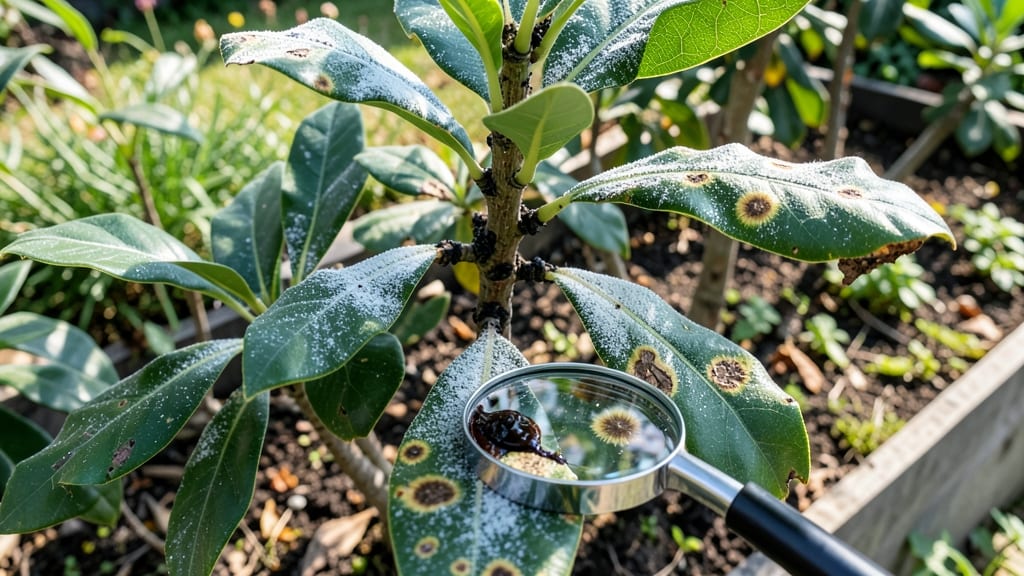
Your bay leaf tree’s glossy leaves are turning brown and dropping faster than you can say "basil pesto"—and these bay leaf tree diseases don’t just ruin the harvest; they can kill your tree if ignored.
Fungal blights like anthracnose and root rot don’t just ruin the harvest—they can kill your tree if ignored. The good news? Most issues respond to early action, and I’ve treated enough infected trees to spot the warning signs before they spread.
Diseases like powdery mildew or leaf spot start with tiny yellow spots that expand into blackened patches, often triggered by overwatering or poor airflow. The moment you see these, prune infected branches immediately and avoid overhead watering.
My trees bounce back within weeks when I catch it early—before the fungus moves to the trunk.
You’ll restore that vibrant green canopy with a mix of copper fungicide (for severe cases) or neem oil spray (organic option) applied every 7–10 days. The key is consistency: keep the soil moist but not soggy, space plants for airflow, and mulch to prevent soil splash.
Within 4–6 weeks, your tree should push fresh, disease-free growth.
If the problem persists after two treatments, the issue might be deeper—like root rot or a systemic infection. That’s when a soil test or arborist’s help becomes your best bet. But for most gardeners, these steps work wonders before it gets that far.
Root Causes Of Bay Tree Ailments
Understanding why bay leaf trees fall prey to diseases starts with recognizing their vulnerabilities. These evergreen trees, prized for their aromatic leaves and ornamental value, are susceptible to fungal infections due to a mix of environmental stress, poor cultural practices, and inherent biological weaknesses.
Let’s break down the key reasons these diseases take hold—and how you can prevent them.
🍄 Fungi are the primary culprits behind bay leaf tree diseases, and they thrive when conditions favor their spread. Here’s how:
- High Humidity & Poor Airflow: Bay trees love Mediterranean climates, but when humidity spikes (especially above 70%) or airflow is restricted—like in dense plantings or crowded gardens—fungal spores latch onto leaves and bark. Botrytis cinerea (gray mold) and Phytophthora (root rot) are notorious for exploiting these conditions. - Wet Foliage: Overhead watering or frequent rainfall keeps leaves damp for extended periods, creating a perfect breeding ground for fungi.
Unlike some plants, bay trees don’t dry quickly, leaving them susceptible to infections like anthracnose or leaf spot. - Warm, Moist Soil: Fungal pathogens like Armillaria (honey fungus) or Fusarium target roots when soil stays soggy.
Bay trees dislike "wet feet," and waterlogged conditions weaken their defenses, allowing pathogens to invade through root wounds or natural openings.
Pro Tip: 💡 Space your bay trees 6–8 feet apart to improve airflow, and water at the base (not overhead) to keep foliage dry.
🌡️ Bay trees are resilient, but extreme or fluctuating conditions stress them out, making them easier targets for disease:
- Temperature Swings: Sudden drops below 20°F or heatwaves above 90°F weaken the tree’s immune response. Cold stress can crack bark, while heat stress reduces chlorophyll production, leaving leaves vulnerable to fungal invasion. - Poor Drainage: Bay trees hate soggy soil.
Compacted or clay-heavy soil traps moisture, promoting root rot caused by Phytophthora or Pythium. Even well-draining soil can become problematic if overwatered. - Nutrient Imbalances: Deficiencies in magnesium or iron (common in alkaline soils) lead to yellowing leaves (chlorosis), which fungi like Septoria exploit to enter the plant.
Over-fertilizing with nitrogen can also make trees soft and susceptible to pests that introduce fungal spores.
Pro Tip: 🌡️ Mulch with organic matter (like pine bark) to regulate soil temperature and improve drainage—just keep mulch 2–3 inches away from the trunk to prevent rot.
👨🍳 Poor gardening practices often create the perfect storm for bay tree diseases:
- Overpruning or Wounding: Heavy pruning (especially in late summer/fall) leaves open wounds that fungi like Venturia (apple scab relative) can infect.
Bay trees also bruise easily when mishandled during transplanting. - Reusing Contaminated Tools: Pruners, shears, or even gloves can transfer fungal spores from infected to healthy trees. Cercospora leaf spot spreads this way, causing brown spots with yellow halos. - Ignoring Infected Debris: Fallen leaves, twigs, or dead branches harbor fungal spores.
If left on the ground, they reinfect the tree season after season. Bay trees are particularly prone to Alternaria leaf spot, which overwinters in plant debris.
Pro Tip: ✨ Sterilize tools with 70% isopropyl alcohol between cuts, and remove all fallen leaves in autumn to break the disease cycle.
🐜 Some diseases don’t strike directly—they hitch a ride with pests:
- Scale Insects & Aphids: These sap-suckers weaken bay trees by draining nutrients, making them more susceptible to sooty mold (Capnodium) or secondary fungal infections.
Their sticky honeydew also traps moisture, creating a fungal buffet. - Borers & Bark Beetles: Wood-boring insects create entry points for fungi like Armillaria (honey fungus), which then spreads through the vascular system, causing white root rot or brown stem blight.
Pro Tip: 🎯 Monitor for pests early—neem oil or horticultural oil can deter scale and aphids before they compromise your tree’s health.
🌱 Some fungal diseases are already lurking in the soil, biding their time until conditions are right:
- Dormant Spores: Pathogens like Verticillium or Fusarium can lie dormant in soil for years, waiting for a stressed bay tree to move in.
These fungi clog the plant’s xylem vessels, causing vascular wilt (yellowing, wilting, and dieback). - Contaminated Soil Amendments: Compost or mulch from unknown sources may carry fungal spores.
If the soil pH is off (bay trees prefer 6.0–7.5), it further stresses the tree, making it easier for pathogens to take hold.
Pro Tip: 📊 Test your soil before planting—amend with sulfur to lower pH if needed, and avoid fresh manure, which can introduce pathogens.
Quick Fixes for Bay Leaf Tree Troubles
Now that you’ve identified the issue plaguing your bay leaf tree, it’s time to roll up your sleeves and get it back to health! Below are practical, step-by-step solutions tailored to the most common fungal blights and diseases, along with prevention tips to keep your tree thriving long-term.
Remember: early action is key—don’t wait until the damage spreads!
🔥 Anthracnose: prune and protect
Cause: Fungal spores thrive in damp, humid conditions, leading to dark, sunken lesions on leaves and stems.
Fix It:
- Remove Infected Parts 🔪
- Snip off all affected leaves, stems, or branches using sterilized pruners (wipe with rubbing alcohol between cuts).
- Dispose of infected plant debris in the trash (not compost)—this prevents spores from reinfecting.
- Boost Airflow 🌬️
- Thin out dense foliage to improve circulation around the tree.
- Space plants at least 3–4 feet apart to reduce humidity buildup.
- Fungicide Application 💊
- Spray with a copper-based fungicide (like Bordeaux mixture) or a neem oil solution (1 tbsp neem oil + 1 quart water + a drop of dish soap).
- Apply every 7–10 days until new growth appears healthy.
- Water Wisely 💧
- Water early in the morning to allow leaves to dry quickly.
- Avoid overhead watering—use a drip irrigation system or water at the base.
💡 Prevention Tip: Mulch with cedar chips (natural fungicidal properties) and avoid wetting foliage during irrigation.
🍄 Powdery mildew: scrub and shield
Cause: White, powdery patches on leaves (caused by Erysiphe fungi) block sunlight and weaken the tree.
Fix It:
- Clean the Leaves 🧼
- Gently wipe leaves with a mild soapy water solution (1 tsp dish soap + 1 quart water) using a soft cloth or sponge.
- For stubborn mildew, spray with a baking soda mix (1 tbsp baking soda + 1 quart water + a few drops of oil to help it stick).
- Prune for Sunlight ☀️
- Remove overlapping branches to ensure full sun exposure (powdery mildew loves shade and dampness).
- Fungicidal Spray 🛡️
- Use sulfur-based fungicides (like Liqui-Cop) or potassium bicarbonate spray (follow label instructions).
- Apply every 10–14 days during humid weather.
- Adjust Watering 🚰
- Water deeply but infrequently—aim for 1–1.5 inches per week (check soil moisture with your finger).
- Water at the base, not overhead.
💡 Prevention Tip: Plant resistant varieties (like ‘Tif Leaf’ bay trees) and space plants widely to prevent crowding.
🌡️ Root rot: drain and disinfect
Cause: Overwatering or poor drainage leads to Phytophthora or Pythium fungi, rotting roots and causing wilting.
Fix It:
- Stop Watering Immediately ⏰
- Let the soil dry out completely before watering again.
- If the tree is in a pot, check drainage holes—they must be unclogged.
- Improve Drainage 🏗️
- For in-ground trees: Amend soil with perlite or coarse sand to loosen compacted areas.
- For potted trees: Repot in well-draining soil mix (50% potting soil, 30% perlite, 20% compost).
- Fungal Treatment 🧪
- Apply a systemic fungicide like Subdue (metalaxyl) or Aliette (fosetyl-Al) to the soil.
- For severe cases, root drench with hydrogen peroxide (3%) (1 part H₂O₂ to 10 parts water) to kill fungi.
- Prune Damaged Roots 🌿
- If roots are mushy or black, trim them with sterilized shears and treat with cinnamon powder (natural antifungal).
💡 Prevention Tip: Plant bay trees in slightly raised beds or mounds to prevent water pooling. Use drip irrigation instead of sprinklers.
🍂 Leaf spot: sterilize and spray
Cause: Dark spots with yellow halos (often caused by Alternaria or Cercospora) spread rapidly in wet conditions.
Fix It:
- Remove Spotted Leaves 🗑️
- Pick off all infected leaves and destroy them (do not compost).
- Sterilize pruners with rubbing alcohol after each cut.
- Apply Fungicide 🛡️
- Spray with chlorothalonil (like Daconil) or copper fungicide every 7–10 days until new growth is spot-free.
- Adjust Care Routine 🌱
- Water in the morning to allow foliage to dry.
- Avoid overhead watering—use a soaker hose instead.
- Boost Tree Health 💪
- Fertilize with a balanced, slow-release fertilizer (like 10-10-10) to strengthen defenses.
- Mulch with wood chips (2–3 inches deep) to improve soil health.
💡 Prevention Tip: Space plants 4–5 feet apart and prune for airflow—crowded trees stay damp longer.
To keep your bay leaf tree disease-free, follow these year-round habits:
- Inspect weekly for early signs of fungal growth.
- Sterilize tools before and after pruning.
- Avoid wetting leaves—water at the base.
- Prune for airflow—thin out dense branches.
- Use resistant varieties if possible (e.g., ‘Sicilian’ bay trees).
- Rotate fungicides to prevent resistance (e.g., alternate copper and sulfur sprays).
🎯 Final Pro Tip: If your tree is severely infected, consider removing it to prevent spread—sometimes, sacrificing one plant saves the garden! 🌳💚
Frequently asked questions
What are the first signs my bay leaf tree has a fungal disease?
Look for small yellow spots on leaves that turn brown or black with yellow halos—common with leaf spot or anthracnose. Powdery mildew appears as white, powdery patches on upper leaves, while root rot shows as wilting despite moist soil. Act fast: prune infected areas immediately and avoid overhead watering.
Can I use household items like baking soda to treat bay tree diseases?
Yes! A baking soda spray (1 tbsp baking soda + 1 quart water + a drop of dish soap) works well for powdery mildew or early leaf spot. For stubborn cases, combine with neem oil (1 tbsp oil per quart of water) for better coverage. Reapply every 7–10 days during humid weather.
How do I know if my bay tree has root rot or just needs more water?
Root rot causes yellowing leaves, wilting, and a foul smell from the soil—even when the ground feels moist. Stick your finger 2 inches deep: if it’s soggy, you’ve got root rot. Healthy bay trees should have dry topsoil between waterings. Stop watering immediately and improve drainage.
Will pruning help prevent bay tree diseases?
Prune to remove crowded branches (improves airflow) and sterilize tools with rubbing alcohol between cuts. Thin out 30% of dense foliage in spring to reduce humidity. Avoid pruning in fall—wounds heal slower then and invite fungal infections.
When should I call an arborist for my diseased bay tree?
If 50%+ of leaves are infected, the trunk shows dark streaks, or the tree wilts despite your care, it’s time for professional help. Severe cases may need systemic fungicides or soil testing for hidden pathogens like Verticillium wilt. Don’t wait—diseases spread fast!