
Pruning
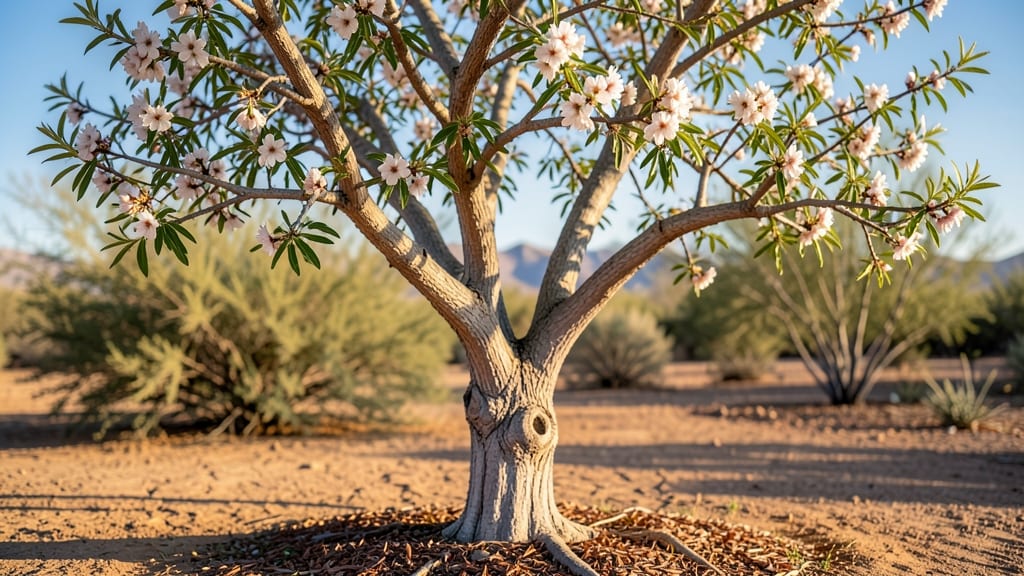
Pruning your almond tree in Arizona isn’t just about shaping branches—it’s about surviving the desert heat while maximizing those sweet, crunchy rewards. 🌵 I’ve watched my own almond tree go from struggling to thriving after adjusting my pruning schedule to match Arizona’s brutal summers and mild winters.
The key? Timing cuts to avoid stressing the tree when temperatures soar, and focusing on airflow to prevent fungal issues that love the monsoon humidity.
You’ll need sharp pruning shears, a ladder (for those higher branches), and a clear day when temps are below 85°F—any hotter and you risk sunburned cuts. Start by removing dead or crossing branches first, then thin out the canopy to let sunlight reach the center.
Arizona’s intense sun means your tree needs airflow almost as much as water, so don’t go overboard with dense foliage. Think of it like giving your tree a breath of fresh air between those scorching afternoons.
By late winter or early spring, you’ll see the payoff: a tree that produces more nuts per branch and recovers faster from pruning. The nuts themselves stay crisp and flavorful, not shriveled from heat stress.
Plus, a well-pruned tree handles Arizona’s drought cycles better, sending roots deeper where moisture lingers. It’s not just about the harvest—it’s about setting your tree up to outlast the desert.
For Arizona growers, winter pruning (December-February) is ideal, but if you miss that window, late summer cuts work too—just avoid pruning during the monsoon season when fungal spores are everywhere. And here’s a pro tip: mulch heavily around the base to lock in moisture and keep roots cool.
Your tree will thank you with stronger growth and bigger yields next season.
📚 In This Guide
- What you need
- Instructions
- Tips and common mistakes
- Wrapping up and next steps
What you need
- ● Pruning Shears: Bypass shears (for small branches, 6–8 inches) – 1 pair
- ● Loppers: Heavy-duty, 18–24 inches (for thicker branches) – 1 pair
- ● Pruning Saw: Curved blade, 16–20 inches (for large branches) – 1
- ● Gloves: Heavy-duty work gloves (cut-resistant) – 1 pair
- ● Disinfectant: 70% isopropyl alcohol or bleach solution (1 part bleach to 9 parts water) – small spray bottle
- ○ Pruning Sealant: Optional but helpful for larger cuts (e.g., Tanglefoot Tree Wound Pruning Sealer) – small tube
- ● Ladder: Sturdy, extendable (12–16 ft) – 1, if trees are tall
- ● Buckets/Bags: For collecting pruned branches – 2–3
- ○ Sharpie or Marker: For labeling branches if grafting (optional) – 1
- ● Timing: Prune during Arizona’s dormant season (late winter/early spring, before bud break). Avoid pruning during extreme heat or rain.
- ● Weather Check: Choose a cool, overcast day (60–70°F) to reduce stress on the tree.
- ● Tree Health: Inspect trees for disease or pests (e.g., aphids, powdery mildew) before pruning. Treat if needed.
- ● Local Regulations: Check Arizona’s agricultural guidelines or HOA rules if applicable (some areas restrict pruning near property lines).
- ● Safety Gear: Safety goggles, long sleeves, and closed-toe shoes.
- ● Tree Wrap: For young trees (to protect from sun scorch).
- ● Fertilizer: Balanced 10-10-10 or almond-specific fertilizer (apply post-pruning).
- ● Camera/Phone: To document pruning progress (great for tracking growth!).
Instructions for pruning almond trees in Arizona’s climate
Here’s the seasonal approach I’ve used to keep my Arizona almond trees healthy and productive—timing is everything in our dry heat.
✂️ Step 1: Winter Pruning for Structure and Airflow
Prune your almond tree in late winter (January–February) when the tree is still dormant but the coldest temperatures have passed. This is the best time to shape the tree and remove dead or crossing branches. Start by removing any suckers—those vigorous shoots growing from the base or trunk. They steal energy from nut production.
Next, look for branches that cross or rub against each other. These will eventually damage the bark and create entry points for disease. Use clean, sharp pruning shears to make 45-degree cuts just outside the branch collar (the swollen area where the branch meets the trunk). Avoid leaving stubs—this slows healing and invites infection.
☀️ Step 2: Summer Light Pruning to Reduce Stress
Arizona’s summer heat can stress almond trees, so I do a light pruning in mid-summer (June–July) to improve airflow and reduce water loss. Focus on thinning out the canopy by removing small, crowded branches inside the tree. These branches compete for water and sunlight, weakening the tree’s ability to produce nuts.
Remove no more than 20% of the tree’s foliage in this step—you’re not shaping, just creating space. Cut back to a lateral branch or bud, and always make clean cuts. Avoid pruning during extreme heat (above 100°F), as this can shock the tree and increase susceptibility to pests.
🌱 Step 3: Post-Harvest Cleanup for Disease Prevention
After the nuts have fallen (typically late summer to early fall), do a final cleanup to remove all mummified nuts (dried, shriveled shells still clinging to branches) and fallen leaves. These can harbor bacterial blight and anthracnose, common in Arizona’s monsoon season. Use sterilized pruners to cut out any branches with visible signs of disease—burn or discard them, never compost.
This is also the time to thin out water sprouts (fast-growing, weak shoots) that may have appeared after harvest. These branches are energy vampires, diverting resources away from next year’s crop. Prune them back to a strong lateral branch or bud, and avoid over-pruning—you want to leave the tree with enough foliage to photosynthesize through the winter.
⏰ Step 4: Annual Maintenance Checks
Once a year, in early spring (March), do a quick health check of your almond tree. Look for dead, dying, or diseased branches and remove them immediately. Arizona’s dry climate can mask issues, so pay attention to peeling bark, oozing sap, or unusual growth patterns—these are red flags for pests or disease.
If you notice hollow spots or large cankers, these may indicate bacterial infection or insect damage. Prune out affected areas, sterilize your tools with rubbing alcohol, and consider applying a copper-based fungicide if needed. Healthy branches should have smooth bark and vigorous buds—these are your cues that the tree is thriving.
Tips & tricks for pruning almond trees in Arizona
Timing and technique make all the difference when shaping your almond trees for maximum yield—here’s what I’ve learned after years of Arizona pruning.
Seasonal Timing Matters: The late winter window (January–February) is critical because your tree is dormant but not frozen. If you prune too early, you risk exposing fresh cuts to hard freezes, which can invite disease. I always check the forecast and wait until we’ve passed the coldest nights—usually after the last frost warning. For summer pruning (June–July), avoid anything above 100°F—this is when the tree’s stress response kicks in, making it vulnerable to pests.
Tool Prep Prevents Problems: Sterilizing your pruning shears between cuts is non-negotiable in Arizona’s climate. I use a 1:10 bleach-water solution or 70% rubbing alcohol to wipe down blades after each cut. This prevents spreading bacterial blight, which thrives in our monsoon season. Also, keep your tools sharp—dull blades crush branches instead of making clean cuts, which slows healing and invites infection. I test my shears by cutting a piece of paper; if it tears, the blades need sharpening.
Visual Cues for Healthy Cuts: When making those 45-degree cuts in Step 1, look for the branch collar—the swollen area where the branch meets the trunk. Your cut should be just outside this collar, never flush with it. A good rule of thumb is to cut where the branch is about the width of a pencil from the trunk. This ensures proper healing while maintaining the tree’s natural structure. I always make a small notch on the underside of the branch to guide my cut—it prevents over-pruning and creates a better seal.
Post-Pruning Care for Arizona’s Heat: After any significant pruning, water deeply at the base of the tree to help it recover. In our dry climate, this is especially important after summer thinning (Step 2). I use a soaker hose to deliver water slowly over 2–3 hours, which encourages deep root growth. Avoid overhead watering—it can spread disease spores. Also, mulch around the base with 2–3 inches of organic material (like wood chips) to retain moisture and regulate soil temperature.
Pro Tips for Almond Tree Arizona
- Timing and technique make all the difference when shaping your almond trees for maximum yield—here’s what I’ve learned after years of Arizona pruning.
- Seasonal Timing Matters: The late winter window (January–February) is critical because your tree is dormant but not frozen.
- Tool Prep Prevents Problems: Sterilizing your pruning shears between cuts is non-negotiable in Arizona’s climate.
Frequently asked questions
Got questions about pruning your almond tree in Arizona? You’re not alone!
Here are some of the most common concerns—plus straightforward answers to keep your tree thriving and productive.
When is the best time to prune an almond tree in Arizona’s climate?
The ideal window is late winter to early spring (February–March), before buds swell but after the coldest months. Arizona’s mild winters mean you avoid dormancy stress while still promoting new growth. Skip pruning in summer—it stresses the tree during peak heat.
How much should I trim off in one session?
Aim to remove no more than 20–25% of the tree’s canopy per year. Over-pruning shocks almond trees, reducing yield. Focus on dead wood, crossing branches, and shaping for airflow. Thin out crowded branches to let sunlight reach the center—this boosts nut production!
My almond tree has brown, crunchy branches. Is it dead or just dormant?
If branches snap like dry twigs and peel easily, they’re dead—remove them immediately. Healthy branches bend slightly and have green under the bark. Pro tip: Scrape a small section of bark with a knife to check for moisture. If it’s dry and dark, prune it out!
Can I prune an almond tree in summer if it’s extremely hot?
Only in emergency cases (e.g., storm damage). Summer pruning causes stress, inviting pests or disease. If you must trim, do it early morning or late evening, keep tools sterilized, and water deeply afterward. Otherwise, wait for cooler months.
Are there alternatives to hand-pruning for large Arizona almond orchards?
Yes! For commercial groves, consider:
- Hedge trimming (mechanical shears for uniform rows).
- Topworking (grafting new varieties onto existing trees).
- Dormant pruning with pole saws for hard-to-reach branches.
Wrapping up and next steps
Growing almond trees in Arizona is a rewarding journey, and mastering seasonal pruning is the key to unlocking their full potential! 🌱 With the right tools, timing, and techniques—like winter thinning and summer shaping—you’ll ensure healthy growth, better airflow, and bountiful nut yields for years to come.
Whether you’re a seasoned gardener or just starting out, every trim brings you one step closer to that perfect harvest.
Ready to take the next step? Start small—pick one tree or section to practice your skills, and don’t forget to document your progress. Before you know it, your almond orchard will thrive, and you’ll be sharing your harvest with pride! 🌟