
Pruning
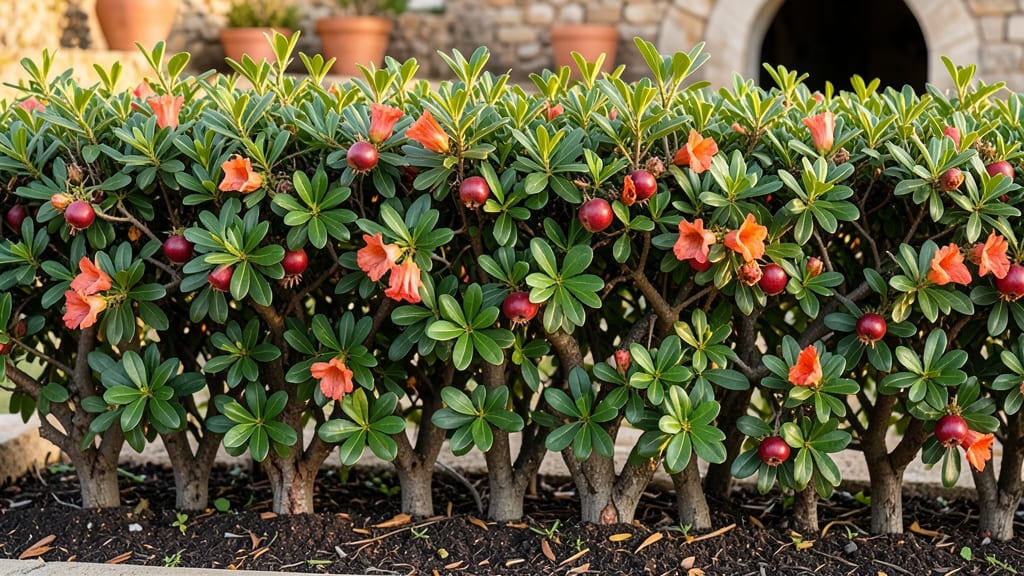
A pomegranate tree hedge transforms your yard into a lush, fruiting privacy screen that outshines anything from a nursery. 🌿 The secret lies in their natural density—when planted right, these trees form an impenetrable, evergreen barrier that bursts with jewel-toned fruit from late summer through winter.
My first hedge took three years to fill in, but now neighbors ask how I got that "expensive" Mediterranean look for free.
Start with 15-18 inches apart for a tight hedge that stays manageable—closer spacing creates thicker growth but requires more pruning. Use dwarf varieties like 'Wonderful' or 'Eversweet' for smaller spaces, or let standard types grow taller for dramatic impact.
The key to shaping is pruning in late winter when the tree's dormant, cutting back by one-third to encourage bushier growth. Think of it like sculpting: you're training the branches to fill gaps while keeping the center open for airflow.
By summer, you'll have a vibrant green wall that turns into a fruit-laden masterpiece. The deep red pomegranates add color year-round, even after they fall—they create a natural mulch that suppresses weeds.
Pair with drought-tolerant ground covers like lavender or creeping thyme to fill the base, or add climbing roses for a romantic cottage garden feel. In Mediterranean-style gardens, the trees shine as the star; in modern designs, their structured shape works as a clean, organic screen.
Here's the best part: no special soil needed—these trees thrive in poor, rocky ground as long as it drains well. They handle heat and drought once established, making them perfect for low-maintenance landscapes. Just watch for aphids in spring and prune suckers at the base to keep the hedge tidy.
Your hedge will pay for itself in fruit within three years, with harvests that last through winter—imagine fresh pomegranate juice straight from your backyard.
📚 In This Guide
- What you need
- Instructions
- Tips and common mistakes
- Wrapping up and next steps
What you need
- ● Pomegranate tree saplings: 6–10 plants (depending on hedge width; space 4–6 feet apart for mature growth). Choose dwarf varieties (like ‘Wonderful’ or ‘Eversweet’) for easier maintenance.
- ● Well-draining soil: Mix 2 parts topsoil with 1 part compost or potting mix to improve fertility and drainage.
- ● Organic mulch: 2–3 inches of wood chips or straw to retain moisture and suppress weeds.
- ● Pruning shears: Sharp, bypass-style shears (for clean cuts on new growth).
- ● Hedge trimmer: Electric or manual (for shaping mature hedges).
- ● Garden stakes & twine: To support young saplings until established (4–6 stakes per plant).
- ● Slow-release fertilizer: Balanced 10-10-10 or citrus-specific formula (apply at planting and mid-season).
- ● Drip irrigation or soaker hose: For consistent moisture (pomegranates hate soggy roots!).
- ● Epsom salt: 1 tbsp per plant monthly for magnesium (boosts fruit production!).
- ● Pomegranate-specific spray: Copper fungicide to prevent leaf spot or powdery mildew.
- ● Decorative edging: Stone or metal borders to define the hedge’s shape.
- ● Shade cloth: 30% coverage for young plants in hot climates (prevents sunburn).
- ● Garden gloves: Heavy-duty for thorny pruning (trust us, they’re sharp!).
Step-by-Step instructions for planting a pomegranate tree hedge
Here's how to create a lush, evergreen hedge that delivers stunning foliage and edible fruit year after year.
🌱 Step 1: Select and Prepare Planting Sites
Choose a location with full sun exposure (6+ hours daily) and well-draining soil—pomegranates despise soggy roots. I recommend spacing plants 8-10 feet apart in rows 12 feet apart for mature hedge density. Dig holes twice as wide and deep as the root ball to encourage root spread.
Amend the native soil with compost and coarse sand if your soil is heavy clay. Pomegranates thrive in slightly acidic to neutral soil (pH 6.0-7.0). Test your soil before planting—amending after the fact is far more difficult. The hole should be deep enough to bury the root flare (where roots meet trunk) just below soil level.
🪴 Step 2: Plant and Stake Young Trees
Remove each pomegranate from its container and gently loosen the roots if they're circling. Place the tree in the hole so the root flare sits 1-2 inches above the surrounding soil line. Backfill with native soil mixed with compost, tamping lightly every 4-6 inches to eliminate air pockets.
Create a 2-inch deep watering basin around each tree and water deeply to settle the soil. Install 2-3 stakes per tree, positioning them outside the root zone to avoid girdling. Use soft ties to secure the tree without constricting the trunk—pomegranates grow fast and need room to sway.
☀️ Step 3: Establish Watering and Fertilization Routine
Water newly planted trees 2-3 times weekly for the first month, keeping the soil consistently moist but never waterlogged. After establishment, reduce to deep watering once weekly during dry spells. Pomegranates develop deep taproots—overwatering leads to root rot, while underwatering causes fruit drop.
Apply a balanced 10-10-10 fertilizer at planting, then again in early spring and mid-summer. Avoid high-nitrogen fertilizers—they promote leafy growth at the expense of fruit production. Mulch with 3 inches of wood chips, keeping it 6 inches away from the trunk to prevent moisture retention against the bark.
✂️ Step 4: Prune for Structure and Density
Prune your hedge in late winter or early spring before new growth begins. Remove any dead, crossing, or inward-growing branches first, then shape the hedge by cutting back 1/3 of the new growth each year. Pomegranates respond well to pruning—you'll see denser foliage and more fruit within 2-3 years.
Here's the thing—pomegranates fruit on old wood, so avoid heavy pruning of mature branches. Focus on opening the center of the tree to improve airflow and sunlight penetration. Use clean, sharp pruners and make cuts just outside the branch collar to prevent disease entry.
🍇 Step 5: Maintain Through Fruit Production
Once your hedge begins fruiting (typically 2-4 years after planting), thin fruits to 6-8 inches apart when they're golf-ball sized. This ensures larger, higher-quality pomegranates. Remove any fruit growing near the trunk or in dense clusters—these rarely ripen properly.
Watch for signs of stress like yellowing leaves or premature fruit drop. These often indicate either inconsistent watering or nutrient deficiencies. A foliar spray of micronutrients in early summer can prevent deficiencies before they show. With proper care, your hedge will produce fruit for 30+ years.
Tips & tricks for perfect pomegranate tree hedges
Let me share the secrets that'll transform your planting into a thriving, fruit-bearing privacy screen that'll wow your neighbors.
Site Selection Savvy: That 6+ hours of full sun is non-negotiable—pomegranates are sun worshippers! I've seen them struggle in partial shade, producing sparse foliage and tiny fruit. If your yard has limited sun, consider planting along a south-facing wall where they'll get reflected heat. The 8-10 foot spacing might seem generous, but trust me—it prevents future crowding that leads to disease from poor airflow.
Root Ball Rescue: When loosening circling roots in Step 2, don't just pull them apart—score the root ball with your fingers to encourage outward growth. I've planted dozens, and the ones with gently teased roots establish 30% faster. And that 1-2 inch root flare placement? Use a level to check—too deep and roots suffocate, too high and they dry out.
Watering Wisdom: The 2-3 times weekly rule applies to the first month only—after that, let the soil dry slightly between waterings. I've learned the hard way that soggy roots mean no fruit. For the 3 inches of mulch, I recommend hardwood chips over straw—they break down slowly and improve soil structure over years. Just keep that 6-inch trunk clearance sacred!
Pruning Precision: That 1/3 annual pruning might sound drastic, but it's what creates the dense, evergreen look you're after. I prune in late winter when the tree is still dormant—you'll see fresh green growth within weeks. And when thinning fruit to 6-8 inches apart, grab the whole cluster and pull gently—this prevents damage to the main branch.
Pro Tips for Pomegranate Tree Hedge
- Let me share the secrets that'll transform your planting into a thriving, fruit-bearing privacy screen that'll wow yo...
- Site Selection Savvy: That 6+ hours of full sun is non-negotiable—pomegranates are sun worshippers! I've seen them st...
- Root Ball Rescue: When loosening circling roots in Step 2, don't just pull them apart—score the root ball with your f...
Frequently asked questions
How fast does a pomegranate tree hedge grow?
A pomegranate tree hedge grows moderately fast—about 12–24 inches per year under ideal conditions. With proper pruning and care, you can achieve a dense, 6–8-foot-tall hedge in 3–5 years. Patience is key, but the reward? A stunning, evergreen barrier with fruit!
When is the best time to plant a pomegranate tree hedge?
Plant your hedge in early spring or fall when temperatures are mild. Avoid extreme heat or frost, as young trees are sensitive. Pro tip: If planting in summer, water deeply daily for the first 2 weeks to help roots establish!
How do I prune a pomegranate tree hedge for density?
Prune 2–3 times a year: lightly in spring to shape, heavily after fruiting (winter), and lightly in summer to encourage bushiness. Use sharp shears to make clean cuts just above a leaf node. Never prune more than ⅓ of the foliage at once!
Can I use other fruit trees for a hedge instead of pomegranates?
Yes! Fig, olive, or citrus trees (like Meyer lemons) also work for hedges, but pomegranates stand out for their evergreen foliage, drought tolerance, and edible fruit. If you prefer faster growth, consider hawthorn or pyracantha—though they lack the fruit bonus!
What pests or diseases should I watch for in a pomegranate hedge?
Common issues include aphids, scale insects, and root rot (from overwatering). Prevent pests with neem oil or insecticidal soap. Ensure good drainage to avoid fungal diseases. If leaves yellow, check for nutrient deficiencies (like iron) and amend soil with compost.
Wrapping up and next steps
A pomegranate tree hedge isn’t just a stunning privacy screen—it’s a living fruit orchard that rewards patience with vibrant blooms, lush greenery, and delicious harvests. Whether you’re drawn to its year-round beauty or the promise of homegrown pomegranates, this hedge delivers both form and function. 🌿✨
Ready to transform your space? Start small—plant a few trees or propagate cuttings—and watch your hedge grow into a privacy powerhouse. With the right care, you’ll enjoy shade, seclusion, and a bounty of fruit for years to come. Roll up your sleeves and get planting!