
Pruning
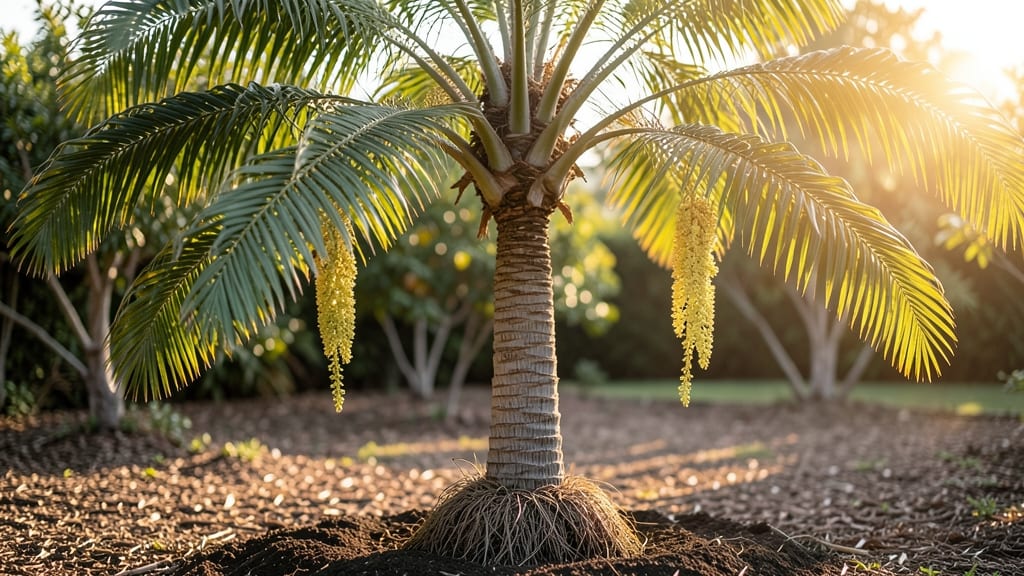
To identify a palm tree male, look for long, drooping yellow or brown flower clusters called catkins, which lack fruit. Female palms produce smaller, rounder reddish spikes with a single seed at the base, crucial for fruit production like coconuts or dates. Gender impacts landscape planning and fruit yields.
Palm tree gender reveals itself through flower structure—males showcase their catkins like nature's tassels, while females grow compact, seed-bearing blooms. 🌿 This isn't just botanical trivia: male palms like the Canary Island date palm thrive in urban settings without messy fruit, while females deliver edible rewards but may require more maintenance.
For example, coconut palms need females for harvests, but their males serve as pollinators in mixed landscapes.
Understanding this distinction helps gardeners make intentional choices. If you're planting for aesthetics or low-maintenance streetscapes, male palms often win. But fruit enthusiasts should prioritize females—just be prepared for the cleanup that comes with messy seed drops during fruiting seasons.
The key is matching your palm's purpose to its gender from the start.
💡 In This Article
- Key Differences Between Male and Female Palm Tree Flowers
- When and Why to Choose Male or Female Palm Trees
Key differences between male and female palm tree flowers
Male palm flowers take the form of catkins—long, pendulous clusters that can reach 2-3 feet in length, resembling nature's tassels. These inflorescences hang downward from the tree's crown and contain thousands of tiny male flowers packed with pollen.
The catkins typically appear yellow or brown, though some species like the Mexican fan palm (Washingtonia robusta) produce striking golden-yellow blooms that create a dramatic visual contrast against the fronds. 🌿 The key botanical difference is that male flowers lack pistils (female reproductive parts), which is why they never develop fruit.
Female palm flowers, by contrast, grow in smaller, rounder clusters that rarely exceed 6-12 inches in length. These inflorescences often appear reddish or greenish, with each flower containing a single seed at its base.
In species like the coconut palm (Cocos nucifera), the female flowers develop into the iconic coconut fruit, while in date palms (Phoenix dactylifera), they become the edible dates we harvest.
The female flower structure is more compact because each bloom focuses its energy on developing the seed rather than producing pollen. This fundamental difference explains why female palms require more nutrients and water during fruiting seasons.
The reproductive biology behind these differences is fascinating. Male palms prioritize pollen production, which is why their catkins contain so many tiny flowers—each designed to maximize pollen output.
Female palms, however, invest energy into seed development, which is why their flowers are more substantial and often contain a single, prominent ovule.
This dichotomy affects not just flower appearance but also the tree's overall growth pattern: male palms typically grow faster and taller because they don't expend energy on fruit production, while females may grow more slowly but develop thicker trunks to support heavy fruit loads. 🌟
One practical example of these differences is the Canary Island date palm (Phoenix canariensis). Male specimens produce those iconic yellow catkins that can become quite messy as they shed pollen, while females develop small, reddish flower clusters that eventually turn into dates.
What many gardeners don't realize is that the female's flower clusters often drop prematurely if pollination fails, leaving behind empty, withered spikes. This is why cross-pollination between male and female palms is crucial for successful fruit production in species like dates and coconuts.
Another interesting aspect is how these flower differences affect seasonal cycles. Male palms typically flower once per year, often in spring or early summer, when conditions are optimal for pollen dispersal.
Female palms, however, may have more staggered flowering periods, especially in tropical species where fruiting can occur year-round given consistent warmth and moisture. This staggered approach ensures that some flowers remain available for pollination even if others fail to produce fruit. 🌱
For those interested in the science, the hormonal differences between male and female palms are governed by phytochemical signaling during development. Male flowers produce higher levels of ethylene, a plant hormone that promotes pollen release, while female flowers have elevated auxin concentrations that support seed growth.
These hormonal imbalances are what create the visible differences in flower structure and function that gardeners can observe in the field.
The takeaway? If you're looking at a palm tree and wondering about its gender, start by examining the flower clusters: long, drooping, and tassel-like means male, while smaller, rounder, and seed-bearing means female.
This simple observation can save you from planting the wrong gender for your landscape goals—whether that's avoiding messy fruit drops or ensuring a reliable harvest. 🌴