
Trees
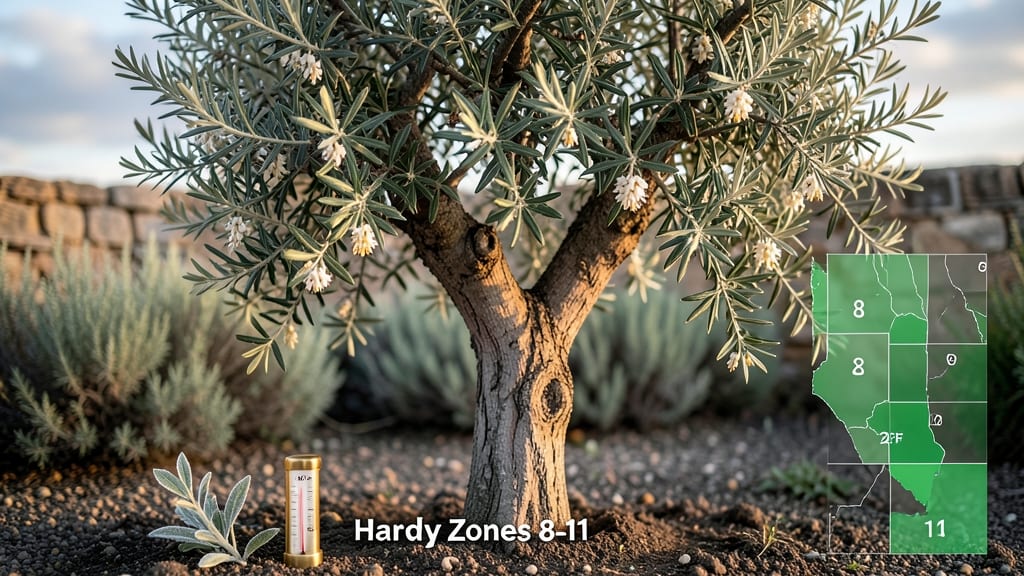
Determining olive tree hardy zones is critical—these trees flourish in USDA zones 8 through 10, handling winter temperatures between 10°F and 30°F (-12°C to -1°C). Cold-resistant varieties like 'Arbequina' or 'Frantoio' can endure brief dips to 15°F (-9°C) with protection, but most olive trees perish when temperatures drop below 20°F (-6°C).
Understanding these temperature thresholds helps you choose the right olive tree for your climate. 🌱 Native to Mediterranean regions, olive trees evolved to thrive in mild winters, which explains why they struggle in colder zones.
For example, 'Manzanillo' olives can tolerate slightly cooler conditions than 'Mission' varieties due to their thicker leaves and deeper root systems. The key difference lies in their ability to resist chilling injury—damage caused by prolonged exposure to temperatures just above freezing, which disrupts cellular functions.
If you're in zones 7 or below, don't give up—there are proven strategies to protect your olive trees. Wrapping the trunk with burlap or using frost blankets can raise the soil temperature by several degrees, while mulching with straw or wood chips insulates roots.
Microclimates also play a role: planting on a south-facing slope or near a windbreak can create a warmer microclimate that extends the tree's survival range. I've seen gardeners in zone 6 successfully grow olive trees using these techniques, though they require extra winter care.
💡 In This Article
- USDA Olive Tree Zone Breakdown by Variety
- Protecting Olive Trees in Marginal Zones
USDA olive tree zone breakdown by variety
Olive trees originate from Mediterranean climates where winter temperatures rarely drop below freezing, which explains their sensitivity to cold. European olive varieties, like the 'Arbequina' and 'Frantoio', are the most cold-tolerant, capable of surviving brief exposures to 15°F (-9°C) due to their smaller leaves and compact growth habit.
These traits reduce heat loss and allow them to recover faster from frost damage.
In contrast, 'Mission' olives, native to California's coastal regions, typically struggle below 20°F (-6°C) because their larger leaves and thinner bark make them more susceptible to chilling injury—a condition where cell membranes rupture due to ice crystal formation.
The science behind these differences lies in their chilling injury thresholds. Olive trees experience irreversible damage when temperatures fall below 28°F (-2°C) for extended periods, but some varieties show resilience due to genetic adaptations.
For example, 'Manzanillo' olives, developed in California's Central Valley, can tolerate slightly cooler conditions (22°F (-6°C)) thanks to their thicker cuticles and deeper root systems that store more water and nutrients.
Asian varieties, like the 'Konservolia', are even more hardy, with some specimens surviving 18°F (-8°C) in protected microclimates, though they produce smaller fruits.
Native climate plays a huge role in these variations. Mediterranean olives evolved in regions where winters rarely drop below 32°F (0°C), so their cold tolerance is limited. However, selective breeding and hybridization have created cultivars better suited for cooler zones.
For instance, the 'Arbequina' variety, originally from Spain, has been crossbred with hardier Asian strains to produce hybrids that can withstand 20°F (-7°C) with proper winter care. This genetic diversity means gardeners in zones 7-9 can choose varieties that match their local climate, reducing the risk of frost damage.
Another critical factor is the tree's growth stage. Young olive trees are far more vulnerable to cold than mature specimens because their bark and root systems aren't fully developed.
A 3-year-old 'Frantoio' tree might survive 20°F (-7°C) with protection, while a 10-year-old tree of the same variety could handle 18°F (-8°C) due to its thicker bark and deeper roots.
This is why many experts recommend waiting until a tree is at least 3-5 years old before exposing it to cooler temperatures without protection.
For gardeners in marginal zones, understanding these nuances can mean the difference between a thriving tree and a lost investment. For example, planting a 'Manzanillo' olive in zone 8 is a safer bet than a 'Mission' because of its natural cold resistance.
However, even the hardiest varieties will struggle if exposed to prolonged sub-freezing temperatures. The key is selecting the right cultivar for your specific climate and providing additional protection during the most vulnerable winter months.
One often-overlooked detail is how soil temperature affects cold tolerance. Olive roots are particularly sensitive to freezing soil, which can occur even when air temperatures are above freezing.
Mulching with 6-8 inches of straw or wood chips can raise soil temperatures by 4-6°F (2-3°C), creating a buffer zone that protects roots from frost penetration. This is why many successful olive growers in zone 7 prioritize root insulation as much as trunk protection.