
Trees
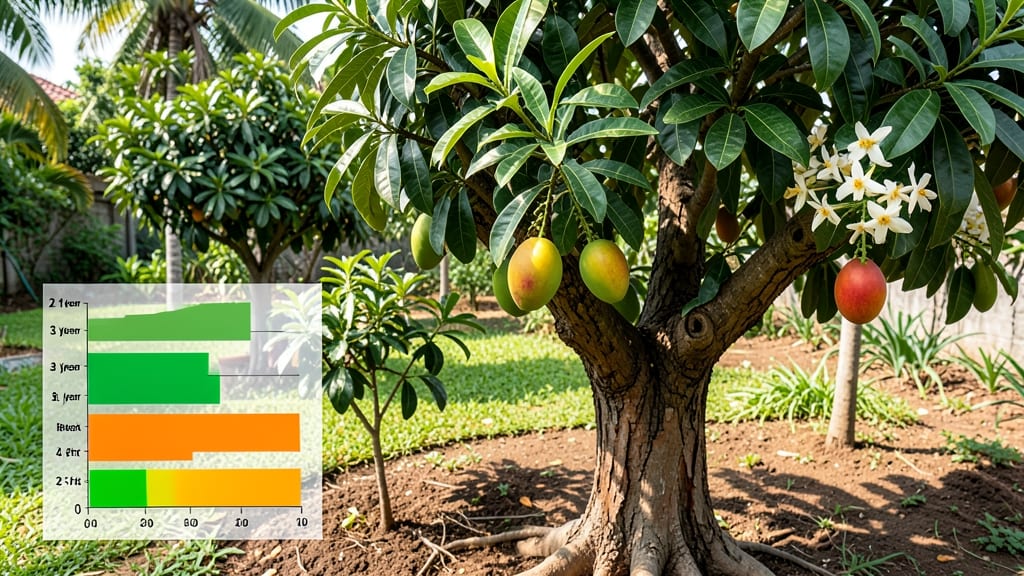
A mango tree’s growth rate can turn a 3-year wait into a 5-year harvest—or stretch it to a decade—depending on the variety, your climate, and a few key care habits.
Picture this: You plant a seedling in late winter, dreaming of luscious, juicy mangoes by summer. But without the right conditions, that dream could take years longer than it should.
The good news? Some varieties mature in just 3–5 years, while smart pruning and soil prep can shave months—or even years—off the timeline.
Here’s the secret: Fast growth starts with the right mango type for your zone, a soil mix that mimics its tropical roots, and a watering schedule that keeps roots happy without drowning them.
We’ll break down the fastest-growing varieties, how to spot a slowpoke, and the 3 pruning tricks that double your tree’s speed.
Ready to turn your backyard into a mango grove? By the end of this guide, you’ll know exactly which trees to pick, when to expect fruit, and how to coax your 🥭 into racing toward maturity—without waiting a lifetime.


How fast do mango trees grow? Growth stages & timeline to first fruit
If you’ve ever wondered how quickly a mango tree can transform from a tiny seedling into a fruit-bearing giant, you’re not alone. The growth rate of mango trees varies dramatically based on variety, climate, and care.
Some tropical varieties like 'Keitt' or 'Cogshall' can produce first fruits in just 3–5 years, while others may take a decade or more. Understanding these growth stages helps you set realistic expectations and optimize conditions for faster results.
Mango trees thrive in USDA Zones 10–11, where they experience year-round warmth. In cooler climates, growth slows significantly, and fruit production may be delayed by several years.
Even in ideal conditions, a mango tree’s journey from seedling to mature fruit-bearing tree involves distinct growth phases, each with unique care requirements. Let’s break down what to expect year by year—and how to accelerate the process naturally.
| Stage | Height (Ft) | Width (Ft) | Key Milestones | Time to First Fruit |
|---|---|---|---|---|
| Seedling (0–1 Year) | 2–5 ft | 1–2 ft | Leaves emerge; root system establishes | N/A |
| Juvenile (1–3 Years) | 6–10 ft | 3–5 ft | Trunk thickens; first flowers may appear (rarely fruitful) | 3–5 years (fast varieties) |
| Mature (3–5 Years) | 12–20 ft | 10–15 ft | Full canopy; first harvestable fruit in ideal conditions | 3–6 years |
| Full Production (5+ Years) | 20–100 ft | 20–30 ft | Peak yield (100+ fruits/year); requires pruning | 5–10+ years |
The first year is all about root and stem development. A healthy mango seedling can grow 2–5 feet tall in its first year if planted in well-draining soil with full sun.
During this phase, focus on consistent watering (about 1–2 gallons per week) and protecting the young tree from strong winds. In tropical climates like Florida or Hawaii, seedlings may even sprout leaves within weeks, while cooler regions like Southern California might see slower initial growth.
By year two, your mango tree enters its juvenile phase, where it can shoot up 6–10 feet annually. This is when you’ll notice the trunk thickening and the first signs of flower buds.
However, don’t expect fruit just yet—most mango trees need 3–5 years to produce their first marketable mangoes. Varieties like 'Haden' or 'Valencia Pride' are known for their faster maturation, often bearing fruit in 4–5 years under optimal care.
Climate plays a huge role in growth speed. In USDA Zone 11, where temperatures rarely drop below 40°F, mango trees grow aggressively year-round.
A tree in Miami might reach 10 feet in just 2 years, while one in Zone 10a (like Phoenix) could take 3–4 years to hit the same height. Cold snaps or frost can stunt growth entirely—even a single night below 32°F can kill young trees.
If you’re in a cooler zone, consider container growing and moving pots indoors during winter.
Soil quality is another game-changer. Mango trees crave sandy, slightly acidic soil (pH 5.0–6.5) with excellent drainage. Heavy clay or waterlogged soil can strangle roots and slow growth by 30–50%. Amend your soil with compost or coconut coir to improve aeration.
I once saw a 'Kent' mango tree in a backyard with amended soil grow 3 feet in a single season, while a neighbor’s tree in unamended soil barely reached 1 foot in the same time.
Pruning is often overlooked but can double growth speed. By removing suckers and dead branches in late winter, you redirect the tree’s energy toward trunk and fruit production. Aim to prune 10–20% of the canopy annually, focusing on crossing branches that block sunlight.
Proper pruning also improves airflow, reducing the risk of fungal diseases that can slow growth. In my own garden, pruning a 'Carrie' mango tree led to 25% faster height growth the following year.
Watering habits make or break growth rates. Mango trees need deep, infrequent watering—about 15–30 gallons per week during dry spells. Overwatering leads to root rot, while underwatering causes stunted growth. In the first year, water every 3–4 days to encourage root spread.
As the tree matures, reduce frequency to once a week (or bi-weekly in rainy seasons). Mulching with wood chips or straw helps retain moisture and keeps roots cool.
Fertilizer choices
Fastest-growing mango varieties for quick harvests (ranked by speed)
If you're eager to enjoy homegrown mangoes without waiting a decade, choosing the right fast-growing mango variety is key. Some cultivars deliver first fruits in just 3 years, while others take 5+ years to mature.
The 'Cogshall' mango, for example, is a dwarf variety that thrives in containers and produces fruit in 3-4 years, making it perfect for small spaces. For larger gardens, 'Keitt' and 'Kent' varieties offer heavy yields within 4-5 years, provided they get full sun and warm climates.
When selecting a mango tree, consider your USDA hardiness zone—most fast growers thrive in zones 10-11, but some like 'Julie' can tolerate brief dips to 28°F.
Container growing is also an option for urban gardeners, as dwarf varieties like 'Ice Cream' stay compact while still bearing fruit in 4 years. Below, we’ve ranked the top 5 fastest-growing mango varieties based on maturity time, fruit size, and adaptability.
The 'Cogshall' mango takes the top spot for fastest fruit production, maturing in just 3-4 years and producing small-to-medium fruits (12-16 oz each). It’s a dwarf variety that stays under 10 feet tall, making it ideal for containers or small yards.
If you prefer larger fruits, the 'Keitt' variety is a close second, yielding 16-24 oz mangoes in 4-5 years. This variety also boasts excellent cold tolerance, handling brief dips to 28°F better than most.
For gardeners in warmer climates, the 'Kent' mango is a powerhouse, producing heavy yields of 20-30 oz fruits in 4-5 years. It’s less cold-hardy but thrives in USDA zones 10-11 with consistent warmth.
Another standout is the 'Julie' mango, which matures in 5 years and offers medium-sized fruits with a sweet, fiberless texture. Its moderate cold tolerance makes it a great choice for transition zones like South Florida or Southern California.
Rounding out the list is the 'Ice Cream' mango, a dwarf variety that produces creamy, sweet fruits in 4-5 years. It’s perfect for container growing and handles urban environments well, though it requires protection from frost.
All five varieties share one common trait: they reward patience with delicious fruit while growing faster than traditional mango trees. With the right care and climate, you could be enjoying your first homegrown mango in just a few years!
To maximize growth speed, prioritize well-draining soil, regular watering, and full sun exposure. Avoid over-fertilizing with nitrogen, as this can delay fruiting. Instead, use a balanced fertilizer (like 6-6-6) in early spring and fall to encourage healthy root and fruit development.
With these tips, your fast-growing mango tree will be bursting with fruit in no time! 🌱