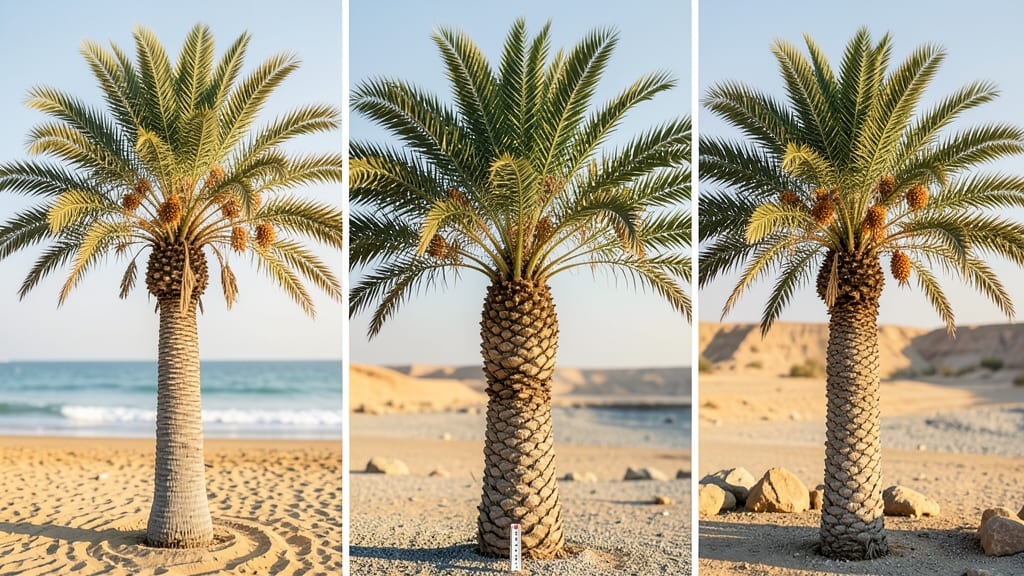
Palm trees can grow up to 200 feet tall—taller than a 10-story building—depending on the species and growing conditions.
Dreaming of a tropical paradise in your backyard? Palm trees aren’t just decorative—they can reach staggering heights, from modest 10-foot specimens to towering giants that dwarf even the tallest buildings. But how tall can they grow? The answer depends on the species, growing conditions, and a little bit of patience.
Some varieties, like the Coconut Palm (Cocos nucifera), thrive in General (Tropical/Subtropical Zones) and can soar to 100 feet or more, while others, like the Pygmy Date Palm, stay compact at just 8-15 feet.
Whether you’re after a statement piece or a manageable backyard addition, understanding the growth potential of your chosen palm is key.
In this guide, I’ll break down the fastest-growing species, the factors that influence height, and how you can encourage—or control—their skyward reach. Ready to find out which palm will dominate your landscape?
Dwarf
8-15 ft (e.g., Pygmy Date Palm)
Container friendly
Semi-Dwarf
15-30 ft (e.g., Mediterranean Fan Palm)
Most popular
Standard
40-100 ft (e.g., Canary Island Date Palm, Coconut Palm)
Full orchard size
Fastest-growing palm tree species and their maximum heights
If you're looking to add a tropical statement to your landscape, palm trees are the perfect choice—but not all species grow at the same speed or reach the same staggering heights. Some can shoot up 10 feet in just 3 years, while others take decades to mature.
Let’s explore the fastest-growing palm species and their maximum heights so you can plan your dream backyard oasis.
The key to understanding palm tree growth lies in their genetic potential and environmental conditions. In ideal climates—like USDA Zones 9-11—some palms can grow 3-5 feet per year during their prime.
Others, like the Medemia furfuracea, stay compact but still offer fast growth for their size. Below, we’ve ranked the top 10 fastest-growing palms by height and growth rate.
⚠️ NOTE: Always check your local frost dates and soil drainage before planting. Even fast-growing palms need the right conditions to thrive!
| Species |
Common Name |
Growth Rate (ft/year) |
Mature Height (ft) |
Ideal Climate |
Time to Mature |
| Roystonea regia |
Royal Palm |
3-5 ft |
60-100 ft |
USDA 10-11 |
20-30 years |
| Cocos nucifera |
Coconut Palm |
4-6 ft |
80-100 ft |
USDA 10-12 |
15-25 years |
| Phoenix canariensis |
Canary Island Date Palm |
2-4 ft |
40-60 ft |
USDA 9-11 |
15-20 years |
| Washingtonia filifera |
California Fan Palm |
2-3 ft |
50-75 ft |
USDA 8-11 |
10-15 years |
| Syagrus romanzoffiana |
Queen Palm |
3-4 ft |
What determines how tall a palm tree can grow?
A palm tree's height isn't just about its species—it's a mix of nature and nurture. Your local climate, soil conditions, and even how you care for it play huge roles.
In USDA Zones 8-11, where palms thrive, factors like water availability and sunlight exposure can push a tree from 10 feet to over 100 feet tall. Let's break down what makes the difference.
For example, a coconut palm in Florida's humid heat might reach 100 feet with ideal care, while the same species in drier California could max out at 60 feet.
The genetic potential of the palm sets the upper limit, but your growing conditions determine how close it gets to that ceiling. Understanding these factors helps you set realistic expectations and care goals.
1
Genetic Potential: The species determines the maximum height. For example, the California Fan Palm tops out at 60 feet, while the Coconut Palm can hit 100 feet or more.
2
Climate Zone: USDA Zones 8-11 are ideal. In Zone 10-11, palms grow faster due to year-round warmth, while Zone 8 may slow growth during cooler months.
3
Sunlight Exposure: 6+ hours of full sun daily maximizes growth. Shade can stunt height by 30-50%, especially for fast-growing species like the Mexican Fan Palm.
4
Water Availability: Deep, consistent watering (1-2 gallons per watering for young trees) fuels rapid growth. Drought stress can reduce height by 20-40% over time.
5
Soil Quality: Well-draining, sandy loam soil with organic matter supports faster growth. Compacted or waterlogged soil can limit height by restricting root development.
6
Pruning Practices: Removing dead fronds improves air circulation but avoid over-pruning, which can slow growth. Strategic pruning can redirect energy to trunk height.
Take the Royal Palm (Roystonea regia), for instance. In Miami's Zone 10B, it can grow 3-5 feet per year and reach 70-100 feet in 20-30 years.
But in San Diego's Zone 10A, cooler coastal winds and drier summers might limit it to 50-70 feet over the same time. The difference? Microclimates and seasonal variations.
Another critical factor is root competition. Palms planted too close to other trees or structures may struggle to reach their full height due to nutrient and water competition. Give your palm at least 10-15 feet of space around its trunk to thrive.
In urban settings, like Los Angeles, this means planning carefully to avoid power lines or sidewalks.
Even with perfect conditions, some palms hit a natural growth plateau. For example, the Pygmy Date Palm rarely exceeds 10-15 feet, no matter how well you care for it. This is its genetic ceiling.
Knowing your palm's species helps you set realistic goals and avoid disappointment. For fast growers like the Windmill Palm, you might see 2-3 feet of growth per year—but only if all conditions align.
🌴
★★★★★4.8(9 reviews)
|