
Light Requirements
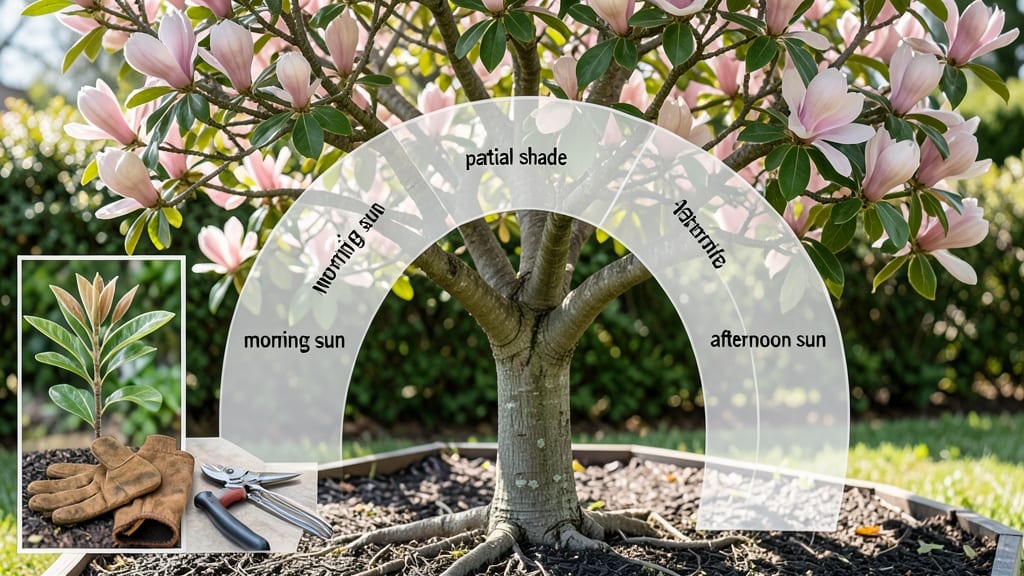
A magnolia tree needs 4 to 6 hours of sunlight daily—but not all sun is created equal, and getting this right is the key to those show-stopping blooms 🌸.
Picture this: your magnolia tree is thriving in morning sun, its leaves a vibrant green, and the flowers are bursting with color. Now imagine it wilting under harsh afternoon rays, its blooms sparse and leaves scorched. The difference? Sun placement matters just as much as the hours.
Most gardeners assume full sun means better growth, but magnolia trees in hot climates like the Southern U.S. often struggle with too much direct afternoon heat. In cooler zones like USDA Zone 6, they can handle a bit more—but even there, the secret is morning sun and afternoon shade.
In this guide, I’ll break down the ideal sunlight balance, how to spot signs of sun stress, and simple tricks to adjust care for your region—so you can enjoy healthy blooms year after year.


Ideal sunlight requirements for magnolia trees: morning sun vs full sun balance
Magnolia trees are stunning additions to any landscape, but their sunlight needs can be tricky to get right. While they thrive in partial sun to partial shade, the balance between morning sun and afternoon shade makes all the difference for healthy growth and vibrant blooms.
Unlike sun-loving plants, magnolias can suffer from heat stress if exposed to harsh afternoon rays, especially in hotter climates.
The key to success lies in understanding how different magnolia varieties respond to sunlight. For example, Southern magnolias tolerate more sun than delicate star magnolias, which prefer gentle morning light. Even a few hours of intense afternoon sun can scorch tender leaves, leading to brown patches and stunted blooms.
Let’s break down the ideal sunlight balance for your magnolia’s health and beauty.
Comparison Table: Sunlight Needs by Magnolia Type
| Magnolia Type | Ideal Sunlight | Morning Sun | Afternoon Sun | Shade Needs |
|---|---|---|---|---|
| Southern Magnolia | Partial Sun (4-6 hrs) | ✅ 3-4 hrs | ⚠️ 1-2 hrs max | Afternoon shade |
| Saucer Magnolia | Partial Shade (3-5 hrs) | ✅ 2-3 hrs | ❌ Avoid direct | Dappled shade |
| Star Magnolia | Partial Shade (2-4 hrs) | ✅ 2 hrs max | ❌ Minimal exposure | Filter through trees |
| Evergreen Magnolia | Partial Sun (5-6 hrs) | ✅ 4 hrs | ⚠️ 1 hr max | Light shade |
As you can see, morning sunlight is far more beneficial than afternoon exposure. The cooler temperatures in the morning allow magnolias to absorb sunlight without risking leaf scorch or heat stress.
For instance, a Southern magnolia can handle up to 4 hours of morning sun but should be shielded from direct afternoon rays, especially in USDA Zones 7-9 where summers are intense.
Why does this matter? Magnolias native to the southeastern U.S. evolved under filtered sunlight in forest understories. Their leaves are sensitive to UV radiation, and prolonged afternoon sun can cause chlorosis (yellowing leaves) or even sunburn.
The partial shade requirement isn’t just about avoiding harsh light—it’s about mimicking their natural habitat for optimal growth.
If you’re planting a magnolia in a full-sun location, like a south-facing yard, use strategic placement to protect it. Position the tree near a building wall, tall shrubs, or a large evergreen to block the harshest afternoon rays while still allowing morning light to reach the canopy.
Even a 50% shade cloth during peak summer months can prevent damage to young trees.
Another critical factor is seasonal sunlight changes. In spring and fall, magnolias can tolerate slightly more direct sun, but summer’s intensity demands caution. For example, a star magnolia in Zone 6 might handle 3 hours of morning sun in May but needs only 2 hours by July.
Pay attention to your local climate—cooler regions like the Pacific Northwest can support more sunlight, while hot, dry areas like Arizona require extra shade.
For container-grown magnolias, sunlight needs shift even more dramatically. Pots heat up quickly, and roots can’t escape the sun’s intensity. In this case, morning sun only is ideal, with afternoon shade provided by a patio umbrella or nearby structure.
If you notice leaf curling or wilting, it’s a clear sign the tree is getting too much direct sun.
Finally, remember that bloom production is directly tied to sunlight balance. Magnolias need enough light to fuel their energy reserves but not so much that they’re stressed. A tree in perfect partial shade will reward you with larger, more vibrant flowers and healthier foliage.
If your magnolia isn’t blooming as expected, revisit its sunlight exposure—it might be getting either too little or too much of the wrong kind.
Start with these sunlight guidelines, and your magnolia will thrive for decades, gracing your garden with its fragrant blooms and glossy leaves. 🌸
Signs your magnolia tree isn’t getting enough (or too much) sun
Your magnolia tree might be silently screaming for help if its leaves are telling a different story than your sunny expectations. Sunlight stress often shows up in subtle (or not-so-subtle) ways, from pale, weak stems to blooms that refuse to appear.
As someone who’s nursed my own magnolias back to health, I’ve learned to read these clues like a gardening detective.
One of the first red flags is leaf discoloration. If your magnolia’s leaves turn a dull yellow or develop brown patches, it’s likely begging for more light—but not too much.
On the flip side, crispy, scorched edges mean your tree is getting too much afternoon sun, especially in hot climates. Let’s decode these signals so you can give your magnolia the perfect light balance.
How Much Sun Does a Magnolia Tree Need?
Most magnolias thrive with 4-6 hours of morning sun and afternoon shade. Southern magnolias tolerate more heat, while Star magnolias prefer gentle light. Avoid direct afternoon sun in hot zones—it burns leaves and stresses roots.
Watch for weak, leggy growth—a classic sign of light deprivation. When magnolias stretch toward the sky in search of light, their stems become thin and brittle. This isn’t just unsightly; it weakens the tree’s structure.
I once had a Saucer magnolia that grew like a bamboo stalk until I moved it to a sunnier spot. Within a season, its stems thickened and blooms returned.
Another dead giveaway? Fewer (or no) flowers. Magnolias are famous for their showstopping blooms, but they need the right light to produce them. If your tree is loaded with leaves but barely flowers, it’s likely not getting enough bright, indirect light.
Even partial shade can reduce blooms if it’s too dense. Try thinning nearby foliage or relocating the tree to a morning-sun spot.
In hot climates, leaf scorch is a harsh reality. If your magnolia’s edges turn crispy and brown, it’s likely getting too much direct sun, especially in the afternoon. This is common in USDA Zones 8-10, where the sun is relentless.
To fix it, add dappled shade with a sheer curtain or plant taller trees nearby to filter the light.
Don’t overlook the soil and roots either. Overwatering combined with too much shade can lead to root rot, which shows up as yellowing leaves and mushy stems.
If you suspect this, improve drainage and adjust the tree’s light exposure gradually. Magnolias hate sudden changes, so move them in stages over a few weeks.
If you’ve checked all these signs and your magnolia still looks off, consider its age and variety. Younger trees need gentler light, while mature Southern magnolias can handle more sun.
And remember: patience is key. Adjusting light exposure takes time, but with the right care, your magnolia will reward you with lush foliage and stunning blooms for decades. 🌸