
Pruning
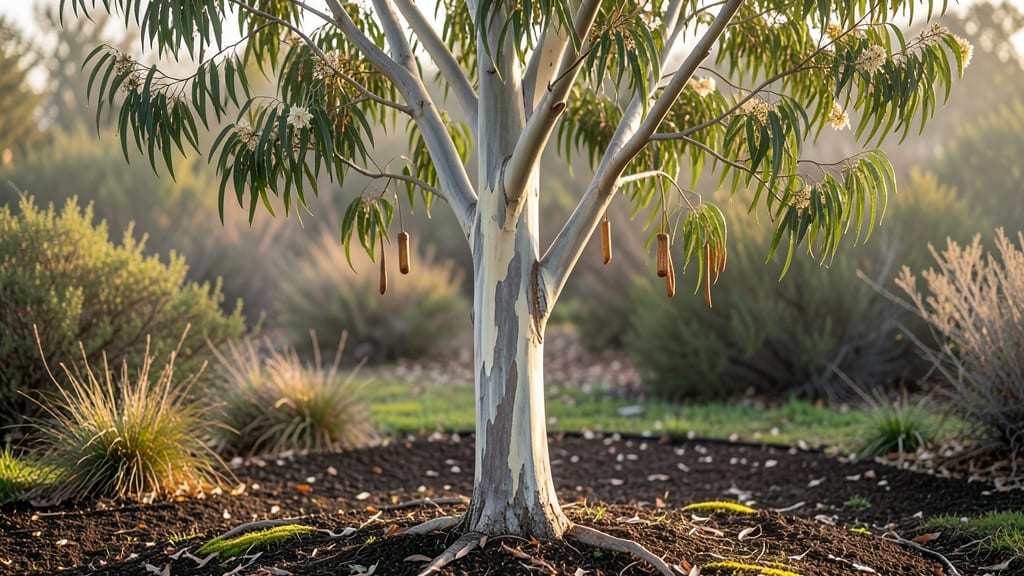
Growing eucalyptus trees in Zone 7 requires selecting cold-hardy varieties, since most species only survive in USDA zones 8-11. Species like Eucalyptus pauciflora (snow gum) or Eucalyptus gunnii (cider gum) can handle brief cold snaps down to 10°F, while others may need winter protection or sheltered microclimates.
Eucalyptus trees are native to Australia's temperate and subtropical climates, where they evolved without exposure to freezing temperatures. 🌳 This lack of cold adaptation means most varieties will suffer leaf burn or dieback in Zone 7's winter lows, even if they thrive in summer heat.
The key exception is the snow gum (E. pauciflora), which has developed natural antifreeze proteins in its leaves—allowing it to survive occasional frost. For other species, strategic planting near south-facing walls or using thick mulch can create a warmer microclimate that makes a difference.
When choosing eucalyptus for Zone 7, consider both hardiness and growth habits. The cider gum (E. gunnii) offers a compact option reaching 20-30 feet, while the smaller E. cinerea (argyle apple) stays under 10 feet—ideal for smaller gardens.
All varieties benefit from well-draining soil and full sun exposure, but the cold-hardy types need extra protection during their first winter until established.
💡 In This Article
- Cold Tolerance Limits of Eucalyptus Species in Zone 7
- Best Eucalyptus Varieties for Zone 7 Gardens
Cold tolerance limits of eucalyptus species in Zone 7
Eucalyptus trees evolved in Australia's frost-free climates, where temperatures rarely drop below 32°F. Their leaf structure—thin, leathery, and wax-coated—actually works against cold survival. Unlike deciduous trees that shed leaves to conserve energy, eucalyptus leaves remain active year-round, making them vulnerable to ice crystal formation in cells during freezes.
The sap composition, rich in volatile oils, can also crystallize when exposed to 20°F or lower, disrupting cellular function and causing leaf burn.
The snow gum (Eucalyptus pauciflora) stands out because it produces natural antifreeze proteins in its leaves, allowing it to tolerate brief dips to 10°F. This adaptation explains why it thrives in higher elevations of Australia's alpine regions.
In contrast, the more common Eucalyptus globulus (blue gum) begins suffering damage at 25°F, with complete dieback likely below 15°F. Zone 7's winter lows—often 10-15°F—explain why most eucalyptus species struggle unless protected.
Frost damage occurs in stages: first, leaf edges turn brown as water in cells freezes and expands. At -5°F, entire branches may blacken and die. The bark, though thick, can't insulate roots effectively in prolonged cold, leading to secondary stress.
This is why microclimates matter—south-facing walls can add 5-10°F of warmth, while mulch (3-4 inches of wood chips) insulates roots by 2-4°F.
Here's how the cold-hardy varieties compare:
- Eucalyptus pauciflora (snow gum): Survives to 10°F, grows 30-50 feet tall with silvery bark
- Eucalyptus gunnii (cider gum): Handles 15°F, compact at 20-30 feet, aromatic leaves
- Eucalyptus cinerea (argyle apple): Tolerates 18°F, stays under 10 feet, fruiting branches
The key difference lies in their native habitats: alpine snow gums grow where temperatures fluctuate between 30-70°F daily, while coastal species like E. globulus never experience frost. This evolutionary divergence explains why some varieties adapt to Zone 7 while others don't. 🌡️
For gardeners in Zone 7, understanding these limits means choosing varieties with proven cold tolerance and implementing protective measures during their first critical winter. The science shows that while eucalyptus can't naturally handle Zone 7 winters, strategic selection and microclimate management can create successful growing conditions.