
Planting
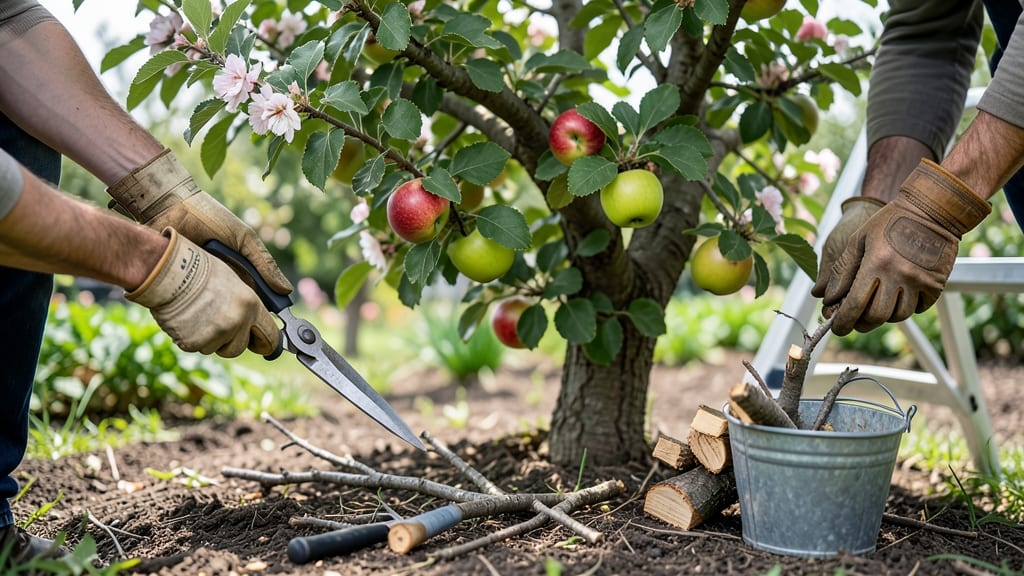
You can prune an apple tree in the summer but with caution: avoid heavy cuts during peak heat, as it stresses the tree and invites disease. Light shaping in late summer (after harvest) is safer than winter pruning, but timing depends on your climate and tree health goals.
Summer pruning disrupts the tree's natural energy flow, making it vulnerable to heat stress and fungal infections like apple scab. 🌳 The key is working after harvest when the tree has stored some energy but before fall's cooler temperatures set in.
I recommend focusing on removing only dead or diseased branches—never more than 10% of the canopy—to preserve the tree's strength.
For climate-specific adjustments, dry regions allow slightly more aggressive trimming in late summer, while humid areas demand extra care to prevent fungal spread. Always sterilize your tools between cuts and avoid pruning during extended heatwaves, as the tree's recovery slows dramatically in temperatures above 85°F.
💡 In This Article
- Summer Pruning Risks for Apple Trees
- Safe Summer Apple Tree Pruning Techniques
Summer pruning risks for apple trees
Apple trees rely on a delicate balance of energy production and storage, and summer pruning disrupts this cycle. When you cut branches during active growth, the tree loses its ability to photosynthesize efficiently, leading to what arborists call "heat stress."
This happens because the tree's vascular system struggles to transport water and nutrients through the larger wound areas created by pruning cuts—especially when temperatures exceed 80°F.
The sap flow slows down, and the tree's natural defenses weaken, making it more susceptible to pests like borers and diseases such as apple scab.
The real danger lies in how humidity interacts with open wounds. In regions with high summer moisture, fungal spores thrive on fresh cuts within 24 hours. Apple scab, for example, spreads rapidly in these conditions, forming dark, velvety patches on leaves and fruit.
Unlike winter pruning, where the tree is dormant and less vulnerable, summer cuts create an ideal environment for pathogens. Studies show that trees pruned in summer without proper care can lose up to 30% more fruit yield the following season due to stress and disease.
Another critical factor is the tree's energy reserves. During summer, apple trees are busy producing fruit and foliage, diverting resources away from wound healing. A heavy pruning session can deplete these reserves faster than the tree can replenish them.
Imagine trying to recover from surgery while simultaneously training for a marathon—your body would struggle to keep up. The same principle applies to apple trees, where the risk of dieback increases significantly when more than 10% of the canopy is removed in one session.
Climate plays a surprising role in how summer pruning affects recovery. In dry regions like California's Central Valley, trees can handle slightly more aggressive trimming because the lack of humidity reduces fungal pressure.
However, in humid climates such as the Pacific Northwest, even minor cuts require immediate sealing with a copper-based fungicide to prevent infection. The difference comes down to how quickly wounds dry out—dry air naturally inhibits fungal growth, while moisture accelerates it.
What most gardeners don't realize is how timing within the summer affects recovery. Pruning too early in the season, when the tree is still focused on fruit development, creates more stress than waiting until after harvest.
The ideal window is late summer, when the tree has already allocated energy to fruit production and can begin redirecting resources toward healing. This is why professional orchardists often wait until August or early September in most climates—just before the tree enters its fall dormancy phase.
To put this into perspective, consider how a human body reacts to surgery during a heatwave versus a cooler season. In extreme heat, recovery slows dramatically, and the risk of infection rises. Apple trees face the same challenges, but without the ability to seek shade or medical care.
The key takeaway is that summer pruning isn't inherently bad—it's about understanding the tree's biological clock and working with it, not against it. 🌿