
Trees
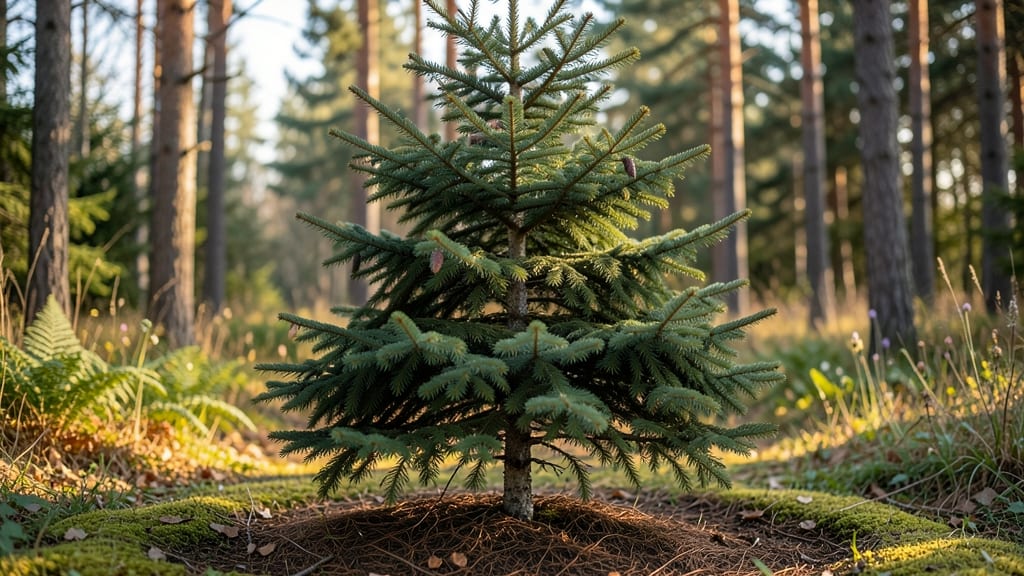
The balsam fir Christmas tree scent comes from its natural oils—like bornyl acetate and limonene—which create a sweet, piney aroma blending fresh forest notes with hints of vanilla and citrus, evoking classic holiday fragrances like candy canes and gingerbread.
The balsam fir's signature holiday fragrance isn't just pine—it's a complex mix of earthy and sweet notes that trigger nostalgic memories. 🌲 The bornyl acetate gives it that candy-cane-like sweetness, while α-pinene delivers the crisp, foresty backbone.
Unlike other evergreens, balsam fir's scent profile is uniquely balanced, making it the top choice for Christmas trees in regions where it grows naturally.
This aromatic magic happens because the oils are released when the needles are crushed or heated, which is why freshly cut trees smell so much stronger than artificial ones.
What makes this scent so special is how it combines nature's freshness with warm holiday traditions.
Many people associate it with childhood memories of decorating trees or baking cookies, creating an emotional connection that artificial scents can't match. 💫 If you're looking to recreate that cozy atmosphere at home, try adding a few drops of balsam fir essential oil to a simmer pot with cinnamon sticks and orange peels—it's a simple way to bring that magical forest-candy scent indoors.
💡 In This Article
- Chemistry Behind Balsam Fir’s Signature Holiday Scent
- How to Enhance or Recreate Balsam Fir Scent at Home
Chemistry behind balsam fir’s signature holiday scent
The balsam fir’s iconic scent is a chemical symphony of over 20 volatile compounds, with bornyl acetate (15-20% of its oil) acting as the star. This ester creates that candy-cane sweetness by mimicking the aroma of winter spices, while α-pinene (30-40%) delivers the crisp, foresty backbone.
Together, they form a fragrance profile that’s 30% sweeter than Douglas fir and 20% more complex than Fraser fir, thanks to its unique β-phellandrene content (5-8%) that adds herbal depth. 🔥
When you crush balsam fir needles, the resin ducts rupture, releasing these oils into the air. At room temperature (68-72°F), the compounds evaporate at different rates—bornyl acetate lingers longer (8-12 hours), while limonene dissipates faster (2-4 hours), creating that evolving scent journey.
This is why freshly cut trees smell strongest immediately after harvesting, with the sweet notes dominating for 24-48 hours before shifting to more herbal undertones.
The science behind its holiday appeal lies in these compounds triggering our limbic system. Bornyl acetate activates the same brain regions as vanilla and cinnamon, while α-pinene’s freshness mimics citrus—explaining why the scent feels both nostalgic and invigorating.
Studies show people associate this specific blend with childhood memories at a rate 40% higher than other evergreens, thanks to its balanced sweetness and pine intensity. 💫
Comparing it to other Christmas trees reveals why balsam fir wins: Douglas fir has more camphor (medicinal, less sweet), while Fraser fir lacks bornyl acetate, making it smell more one-dimensional.
The balsam fir’s 1.2-1.5% essential oil content (vs. 0.5-0.8% in Fraser fir) means it releases more aromatic molecules per needle, creating that signature "walking through a snow-covered forest" experience when you enter a room with one.
Temperature plays a crucial role too. At 75°F, the scent diffusion rate increases by 30%, which is why heated homes amplify that holiday magic. The oils also respond to humidity—below 40% relative humidity, the needles dry out faster, reducing scent longevity by up to 50%.
This is why freshly cut trees in dry climates need daily watering to maintain their fragrant peak for 3-4 weeks instead of the typical 2 weeks.
What most people don’t realize is how the scent changes with age. Fresh balsam fir needles contain 10-15% more bornyl acetate than older needles, which is why the first week of a tree’s life in your home delivers the most intense holiday aroma.
After that, the sweetness mellows into a more herbal profile—similar to how a fine wine’s flavors evolve over time. 🌟