
Pruning
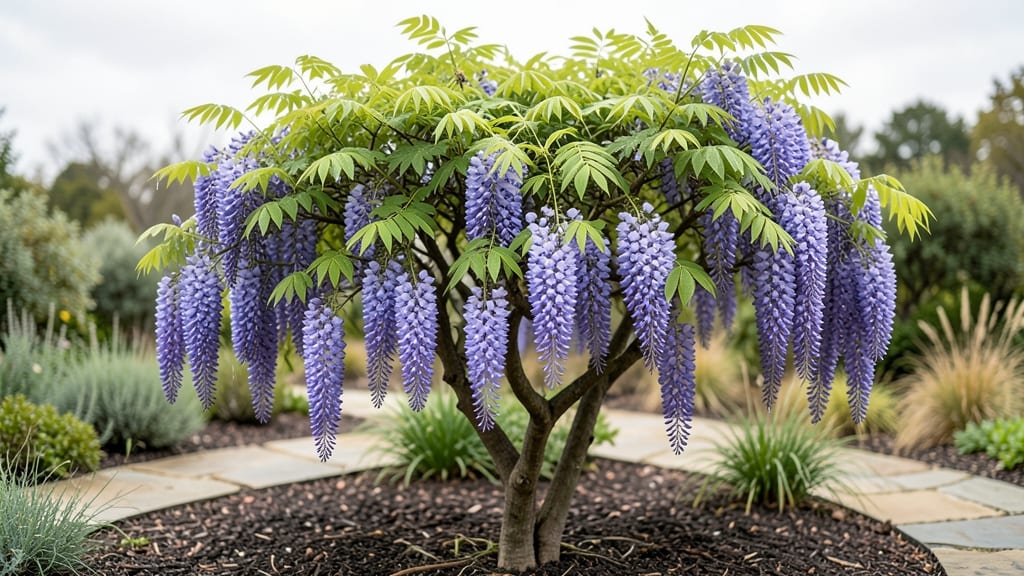
Creating a tree-form Amethyst Falls wisteria that arches gracefully takes patience, but the results—those cascading violet blooms in spring—are worth every pruning session. 🌿 I’ve wrestled with this variety’s vigorous growth, learning the hard way that winter pruning is where you shape its future.
The key isn’t just cutting back; it’s training the main trunk to stand tall while encouraging lateral branches to form those signature arches.
Start with a sunny, sheltered spot and well-draining soil—this wisteria thrives where it gets at least 6 hours of sunlight daily but isn’t scorched by afternoon heat. Plant it deeper than the root ball to encourage strong root development, and stake the young trunk firmly to prevent flopping.
Water deeply once a week in the first year, letting the soil dry slightly between waterings to avoid root rot.
By late winter, before buds swell, prune to remove 1/3 of last year’s growth and shape the tree form. Cut just above a bud that faces outward to encourage upward growth.
Repeat in summer to control sprawl, and always wear gloves—those tendrils are sharp! With consistent pruning, you’ll see a strong central leader and lush, flowering branches by year three.
The real magic happens in spring, when clusters of fragrant violet flowers spill over the arches like a waterfall. Just be ready for bees and humidity—wisteria attracts pollinators and loves moisture, but too much can invite fungal issues.
Mulch around the base to retain moisture without smothering the roots, and watch your tree-form wisteria become the showstopper of the garden.
📚 In This Guide
- What you need
- Instructions
- Tips and common mistakes
- Wrapping up and next steps
What you need
- ● Pruning shears: Bypass pruners (sharp, not anvil-type) for clean cuts on smaller stems (e.g., blank">Fiskars 8-inch).
- ● Loppers: For thicker branches (1–2 inches in diameter), like blank">Gorilla Gardening 48-inch loppers.
- ● Pruning saw: For stubborn, woody stems (e.g., blank">Fiskars 20-inch pruning saw).
- ● Rubbing alcohol (70% isopropyl) or bleach solution: 1 part bleach to 9 parts water (for sterilizing tools between cuts).
- ● Garden gloves: Heavy-duty, cut-resistant (e.g., blank">work gloves with grip).
- ○ Tarp or drop cloth: 4x6 ft to catch debris (optional but handy!).
- ● Marking twine or flags: For tagging branches to prune later (e.g., blank">color-coded tags).
- ● Hand pruners with a crimping tool: For sealing larger cuts (e.g., blank">Felco F-2).
- ● Pole pruner: Extendable for high branches (e.g., blank">15-ft telescoping model).
- ● Pruning sealant: For wounds > ½ inch in diameter (e.g., blank">Tanglefoot Pruning Seal).
- ● Notebook & pen: To track pruning dates and observations.
- ● Safety glasses: Protect your eyes from debris.
Step-by-Step guide to pruning Amethyst Falls wisteria in tree form
This elegant variety thrives with strategic pruning—here’s how to shape it into a stunning, flowering tree form.
✂️ Step 1: Prune in Late Winter Before Bud Break
Start your first pruning in late winter when the plant is still dormant but before buds swell. This is the most critical time to establish your tree form, as it encourages strong branching. I use clean, sharp pruners to make cuts just above a bud that faces outward—this ensures new growth will arch gracefully rather than crowd inward.
Remove any dead, diseased, or crossing branches first. These are easy to spot—they’ll be brown, brittle, or growing toward the center of the plant. For the main structure, select 3-5 strong central leaders (the main vertical stems) and prune the rest back to their base. This creates an open, airy framework perfect for wisteria’s cascading blooms.
🌿 Step 2: Summer Pruning to Encourage Flowering
After the first flush of flowers fades in late spring or early summer, it’s time for your second pruning. Wait until after flowering to avoid cutting off next year’s blooms—wisteria flowers on old wood, so timing is everything. I focus on light shaping rather than heavy cuts; trim back any overly long or unruly branches by one-third of their length to maintain balance.
Look for branches that are growing too vigorously or rubbing against others—these will compete for nutrients and weaken the tree form. Use your fingers to gently bend branches into your desired arch shape before securing them with soft plant ties if needed. Avoid heavy pruning now; you’re guiding growth, not reshaping the entire structure.
⏰ Step 3: Light Maintenance Pruning in Fall
In early fall, do a quick check for any branches that grew out of place during the summer. Remove only the smallest, weakest growth—this keeps the plant tidy without stressing it before winter. I also remove any seed pods that form after flowering; while they’re not harmful, they drain energy the plant could use for next year’s blooms.
This is also the time to thin out any dense foliage that might block light from reaching the center of the tree. Wisteria needs good airflow to prevent fungal issues, so prune just enough to let sunlight filter through. Avoid heavy cuts now—you want the plant to harden off naturally before dormancy.
☀️ Step 4: Winter Cleanup and Structural Adjustments
Just before new growth begins in early spring, do a final cleanup. Remove any dead or weak branches that didn’t make it through winter. I also adjust any branches that didn’t hold their shape from summer ties—gently bend them back into place and secure them again. This reinforces the tree form you’ve worked to create.
Watch for water sprouts (fast-growing, vertical shoots) and prune them back immediately. These steal energy from the main structure and should be removed at their base. With consistent pruning, your Amethyst Falls wisteria will develop long, graceful arches covered in fragrant blooms by spring.
Tips & tricks for perfect Amethyst Falls wisteria pruning
Transforming your wisteria into a stunning tree form takes patience—but these insights will help you avoid common pitfalls and create those dreamy cascading arches.
Timing is Everything: The late winter pruning in Step 1 is non-negotiable for establishing your tree form. If you miss this window, you risk encouraging dense, unruly growth. I've seen wisteria growers skip this step and end up with a tangled mess—don't make that mistake! Mark your calendar for late winter when buds are still dormant but swelling. The goal is to shape the framework before spring growth begins.
The 3-5 Leader Rule: In Step 1, selecting 3-5 strong central leaders creates the perfect open framework. Here's what I learned the hard way: if you choose too many leaders, you'll end up with a bushy plant rather than an elegant tree form. Too few, and you'll have weak structure. Look for branches that are straight, sturdy, and spaced evenly around the plant. These will become your main vertical stems that all other branches will grow from.
Summer Pruning Precision: When you're doing your light shaping in Step 2, focus on trimming back only one-third of overly long branches. This might seem counterintuitive—why not cut more?—but wisteria responds best to gentle guidance. I've found that heavy pruning at this stage can shock the plant and reduce next year's flowering. Think of it as giving your wisteria a haircut rather than a buzz cut—just enough to shape without stressing.
Fall Airflow Strategy: The early fall maintenance in Step 3 is where many gardeners go wrong by being too aggressive. Remember, you're not trying to create a bonsai—you want those graceful arches with plenty of air circulation. Thin out dense foliage just enough to let sunlight filter through to the center. This prevents fungal issues while maintaining that lush, cascading look. A good test is to be able to see light through the center when looking at the plant from above.
Pro Tips for Amethyst Falls Wisteria Tree Form
- Transforming your wisteria into a stunning tree form takes patience—but these insights will help you avoid common pitfalls and create those dreamy cascading arches.
- Timing is Everything: The late winter pruning in Step 1 is non-negotiable for establishing your tree form.
- The 3-5 Leader Rule: In Step 1, selecting 3-5 strong central leaders creates the perfect open framework.
Frequently asked questions
Got questions about cultivating and maintaining the stunning Amethyst Falls Wisteria Tree Form? You’re not alone! Here are some of the most common inquiries—and their answers—to help you master year-round pruning for those dreamy, cascading arches.
When is the best time to prune my Wisteria Tree Form for maximum blooms?
The ideal window is late winter or early spring (before buds swell) and again right after flowering. Avoid heavy pruning in fall—this can stimulate tender growth that won’t survive winter. For the Amethyst Falls variety, light shaping in summer (post-bloom) also encourages denser foliage. Pro tip: Use sharp pruners and disinfect cuts to prevent disease!
How do I prune to encourage a tree form instead of a vine?
Start by selecting a central leader (main vertical stem) and prune competing branches at the base. Train lateral branches horizontally (like a traditional tree) and prune them to 3–5 buds to promote bushier growth. Avoid letting vines sprawl—regularly tie them to a sturdy framework (like a trellis or branches of a host tree). Patience is key: it may take 2–3 years to see a defined tree shape!
What should I do if my Wisteria Tree Form loses leaves or blooms poorly?
Poor performance often signals over-pruning, underfeeding, or winter damage. Check for:
- Nutrients: Amend soil with compost and fertilize in early spring (use a balanced 10-10-10 formula).
- Sunlight: Ensure 6+ hours of sun daily—Wisteria hates shade.
- Pruning balance: Never remove more than 1/3 of the plant in a single season.
- Winter care: Wrap young trees in burlap or use anti-desiccant spray in dry climates.
Can I grow Amethyst Falls Wisteria in containers, or does it need to be planted in the ground?
The Tree Form is possible in containers, but it’s challenging due to its vigorous growth. If you try it:
- Use a large pot (20+ gallons) with drainage holes and a well-draining mix (add perlite/pumice).
- Prune aggressively to control size and train branches upward.
- Move containers indoors (or to a sheltered spot) in winter if temps drop below 10°F.
How do I revive a Wisteria Tree Form that’s been neglected?
Don’t panic! Start with a renewal prune in late winter:
- Cut back all branches to 2–3 buds from the base (even if it looks drastic).
- Fertilize with compost and a slow-release fertilizer.
- Water deeply 2–3 times weekly until new growth appears.
- Prune lightly in spring/summer to shape as it regrows.
Wrapping up and next steps
Transforming your Amethyst Falls wisteria into a stunning tree form with year-round arches is entirely within reach—just a little patience and precision! 🌿 With the right tools, timing, and techniques, you’ll enjoy lush, fragrant blooms and a show-stopping landscape feature for seasons to come.
Start small, stay consistent, and soon, your garden will be the envy of the neighborhood.
Ready to take the next step? Grab your pruners and schedule your first pruning session—whether it’s trimming back winter growth or shaping early spring buds. Your wisteria’s dreamy arches are waiting!