
Diseases
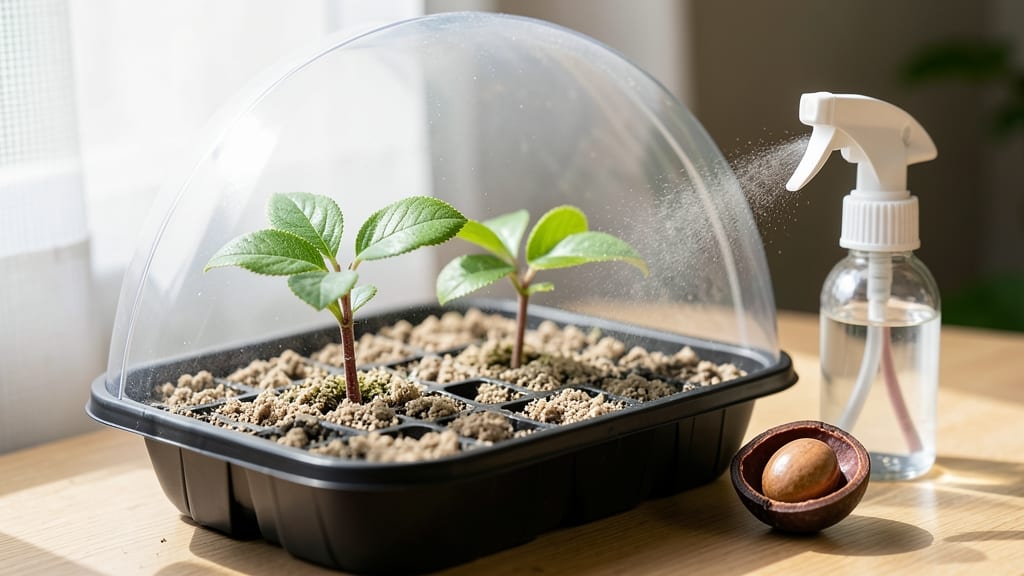
You can grow a cherry tree from a cherry seed, but the results are often disappointing because seed-grown trees rarely produce fruit matching the parent plant. This method demands cold stratification, years of careful cultivation (5-10 years before fruiting), and perfect growing conditions—plus, sweet cherries frequently turn out bitter or sour from seed.
Growing cherry trees from seeds is more of a scientific experiment than a reliable gardening method. 🌱 The genetic variability means your seedling might develop into a completely different variety—think tart instead of sweet, or even a tree that produces inedible fruit.
For serious cherry growers, grafting proven cultivars onto seedling rootstock is the smarter path, as it guarantees fruit quality while leveraging the seedling's hardy root system. Even with perfect conditions, seed-grown trees take years to mature, and their fruit often lacks the flavor and size of grafted varieties.
If you're still tempted to try, start with fresh seeds from a high-quality cherry (avoid store-bought fruit, which may be treated to prevent sprouting). The cold stratification process—mimicking winter's chilling period—is critical for breaking seed dormancy.
Once sprouted, seedlings need consistent moisture, well-draining soil, and protection from pests, as their delicate roots are prone to disease. Remember: patience is key, but the payoff is rarely worth the wait for most gardeners.
💡 In This Article
- Science Behind Growing Cherries From Seeds
- Step-by-Step Guide to Germinating Cherry Seeds
Science behind growing cherries from seeds
The genetic lottery is the biggest challenge when growing cherry trees from seeds. Cherries are self-pollinating but highly heterozygous, meaning each seed carries a unique combination of traits from both parents.
This is why a seedling from your favorite sweet Bing cherry might grow into a tree producing tart, bitter fruit—or no edible cherries at all. The genetic diversity is so extreme that only about 1 in 10,000 seed-grown cherry trees will produce fruit resembling the parent plant. 🌱
Cold stratification is the scientific process that unlocks germination. Cherry seeds require 60-90 days of cold treatment (around 34-40°F) to break their natural dormancy. This mimics winter conditions, where the seed's embryo undergoes biochemical changes that prepare it for growth.
Without this chilling period, most seeds will remain dormant or rot. The stratification process also helps flush out any fungal contaminants that could harm the delicate seedling during germination.
Even with successful germination, seedling trees face a critical flaw in their fruit development. The endocarp (the hard pit) of seed-grown cherries often develops abnormally thick walls, making the fruit difficult to stone and eat. This trait is inherited through the seed's genetic code, which prioritizes survival over fruit quality.
The tree's energy focuses on establishing a strong root system and canopy rather than producing high-quality fruit—a survival strategy from wild ancestors.
Grafting becomes essential for serious growers because it combines the best of both worlds. A seedling's roots (grown from seed) provide disease resistance and hardiness, while the scion (grafted top) carries the desired fruit traits.
This technique has been used for centuries and is why commercial cherry orchards produce predictable, high-quality fruit. Without grafting, your seed-grown tree might spend years producing small, flavorless cherries—or none at all. 🍒
Consider this: The famous Montmorency sour cherry was discovered as a seedling in 1843, but it took decades of selective breeding to stabilize its traits. Most home gardeners don't have the time or space for such experiments.
The science clearly shows that while seed-growing is possible, it's a gamble that often pays off with disappointment rather than delicious fruit.
For those who still want to try, starting with seeds from wild cherry varieties (like black cherry) offers slightly better odds, as these species have evolved to produce edible fruit from seed.
However, even these will rarely match the flavor or size of cultivated varieties. The lesson here is that nature has different priorities than we do—survival over taste!