
Pruning
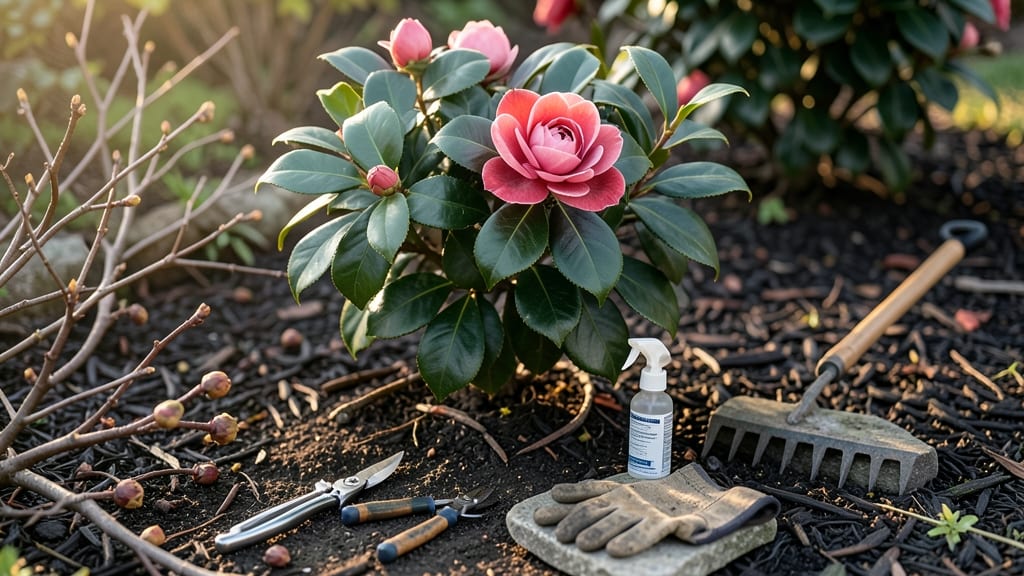
Pruning camellia trees properly is essential for keeping their stunning year-round blooms vibrant: trim right after flowers fade in late spring to protect next year’s buds, use sharp tools to make clean cuts just above outward-facing buds, and never remove more than one-third of growth at once. Heavy pruning in fall or winter risks cutting off spring blooms.
Understanding your camellia’s bloom cycle is key—most varieties flower on old wood, meaning buds form on last year’s growth. 🌸 If you prune too late, you risk cutting off next year’s blooms entirely.
For example, spring-blooming types need light shaping after flowers drop, while fall-bloomers can tolerate slightly later trims. Always sanitize tools between cuts to prevent disease spread, especially in humid climates where camellias thrive.
When shaping, focus on thinning cuts (removing entire branches) rather than heading cuts (trimming back growth), as this improves airflow and reduces disease risk. After pruning, water deeply and apply 2-3 inches of mulch to retain moisture—camellias are sensitive to stress, so gentle care makes all the difference.
💡 In This Article
- Best Camellia Pruning Seasons and Growth Cycle Insights
- Step-by-Step Camellia Pruning Techniques for Healthy Blooms
Best camellia pruning seasons and growth cycle insights
Camellias bloom on old wood, meaning their flowers develop on branches that grew the previous year. This is why timing matters so much—buds for next season’s blooms form in late summer and fall, so pruning too late risks cutting them off.
For spring-blooming varieties, like Camellia japonica, the critical window is immediately after flowers fade (typically May-June in most climates). At this point, you can shape the tree without harming next year’s buds, which are already formed but not yet visible.
The growth cycle explains why late-spring pruning works best. After blooming, camellias enter a period of vegetative growth, producing new leaves and stems. This new growth won’t bear flowers until the following year, so removing it now is safe.
For fall-blooming types like Camellia sasanqua, you can prune slightly later (July-August), but avoid heavy cuts—these varieties still rely on old wood for their flowers. Year-round bloomers need the gentlest approach, with minimal trimming to preserve continuous flowering.
Here’s what happens if you prune at the wrong time: cutting in late fall or winter (when buds form) removes next year’s blooms entirely. The buds appear as small, rounded swellings on the stems—if you see these, it’s too late to prune for that season.
Even light pruning during this period can reduce flowering by up to 40%, as the tree must divert energy to regrow damaged branches instead of forming buds. The key is patience—wait until all flowers have dropped and new growth has started before touching your pruners.
Seasonal adjustments also depend on your climate. In warmer regions (USDA zones 8-10), camellias may bloom year-round, requiring more frequent light pruning to maintain shape. In cooler zones (7 or below), focus on spring pruning and avoid any cuts after mid-August to protect buds from potential frost damage.
The goal is always to balance shaping with preservation—camellias are slow growers, so aggressive pruning stresses them and can take years to recover.
Visual cues help determine readiness. Look for fully opened flowers turning brown and dropping—this signals it’s safe to prune. New leaves emerging from old wood confirm the tree is transitioning to its growth phase.
Avoid pruning when flowers are still vibrant or when buds are visible, as these are clear signs the tree is preparing for its next bloom cycle. The right timing ensures your camellia stays healthy and continues producing its signature lush, colorful blooms year after year.
Understanding these growth patterns transforms pruning from a guessing game into a precise, rewarding process. By aligning your cuts with the tree’s natural cycle, you’re not just shaping the plant—you’re encouraging it to thrive.
Think of it as a conversation with your camellia: listen to its signals (buds, blooms, growth), and respond with care at the right moments. 🌿